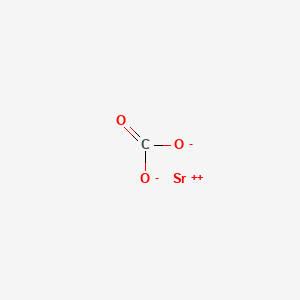
CAS · 1633-05-2
Product Overview
Strontium carbonate is a high-purity electronic-chemicals supplied for industrial and specialty chemical applications. Contact our team for specifications, packaging options and lead times.
Product Specifications
| Item | Specification |
|---|---|
| Appearance | White to off white powder |
| Content | 99.999% min |
| Na | 0.0001% max |
| Al | 0.0001% max |
| Ca | 0.0004% max |
| Mg | 0.0001% max |
| Fe | 0.0001% max |
| Cr | 0.0001% max |
| Heavy metal (Pb) | 0.0001% max |
Applications
1. Electronics Industry
a. Cathode Ray Tubes (CRTs)
● Strontium carbonate丨CAS 1633-05-2 was historically essential in color television and computer display screens. It absorbed harmful X-rays emitted from CRTs by converting them into strontium silicate glass.
● While CRT use has declined, this historical application marked a significant use of SrCO₃.
b. Electronics and Semiconductors
● Used in the production of ferrite magnets, capacitors, and other electronic ceramics.
● As a component in piezoelectric ceramics (like strontium titanate), it is valuable in sensors, actuators, and resonators.
2. Glass and Ceramics
a. Glass Manufacturing
● Enhances the strength and durability of glass.
● Used to produce optical and specialty glass, improving light transmission and reducing unwanted glare.
b. Ceramic Glazes and Tiles
● SrCO₃ is commonly used in ceramic glazes to produce brilliant whites and subtle colors.
● Acts as a flux, improving the melting behavior of the glaze.
● Also reduces crazing (cracks in glaze) and improves glaze hardness and adhesion.
3. Pyrotechnics and Fireworks
● Key source of red color in fireworks.
● The strontium ions produce a bright, deep red flame that is highly desirable in pyrotechnic displays.
● Also helps stabilize other components in the firework composition, improving performance and color consistency.
4. Metallurgy
● Used in aluminum refining to remove impurities like silicon and improve casting quality.
● Acts as a grain modifier in metal alloys, especially in aluminum-silicon systems.
5. Chemical Manufacturing
● Precursor to other strontium compounds such as:
Strontium nitrate (used in fireworks and signal flares)
Strontium chloride (used in dental and medical applications)
Strontium titanate (in electronics)
● Acts as a reactive base in acid-neutralization reactions, particularly in strontium salt production.
6. Health and Dental Applications
● Strontium ions are known to support bone strength and are being explored in bone regeneration materials and dental products.
● While strontium carbonate itself is not directly used in medicine, it is a starting material in the synthesis of bioavailable forms like strontium ranelate or strontium citrate.
7. Environmental and Water Treatment
● In some niche applications, SrCO₃ may be used to remove radioactive strontium-90 by ion exchange or co-precipitation methods.
● It may also aid in alkalinity control and pH adjustment in water systems.
Benefits
√ Thermal and Chemical Stability
● Does not decompose or degrade at typical processing temperatures.
● Safe to handle in industrial environments.
√ Non-Toxic and Environmentally Friendly
● Considered low toxicity and safe in manufacturing settings, especially compared to heavy metals.
√ Coloring Agent in Pyrotechnics
● Produces vibrant red coloration, which is unmatched by other chemicals in fireworks.
√ Enhancer in Ceramic and Glass Production
● Improves glaze texture, finish, and durability.
● Reduces defects like crazing and pinholes.
√ Versatile Precursor
● Used to synthesize a broad array of strontium-based materials for medical, electronic, and industrial use.
Conclusion
Strontium carbonate丨CAS 1633-05-2 is a valuable and versatile inorganic compound with broad utility in ceramics, glassmaking, electronics, fireworks, and as a precursor to other strontium-based materials. Its chemical stability, non-toxic profile, and functional performance across a variety of industries make it a reliable component for both traditional and advanced applications.
Previous
Lead(II) Bromide丨CAS 10031-22-8
Next
Conclusion
A concise summary and suitability assessment for this product is available on request. Contact our team to discuss whether it fits your process and quality requirements.