
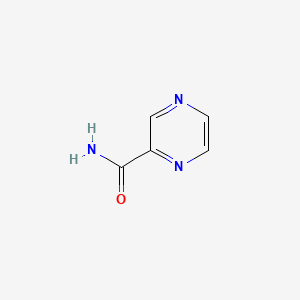
CAS · 98-96-4
Product Overview
Pyrazinamide is a high-purity a-api supplied for industrial and specialty chemical applications. Contact our team for specifications, packaging options and lead times.
Product Specifications
| Grade | BP2022 |
|---|---|
| Appearance | White to off-white crystal powder |
| Assay (on anhydrous basis) | 98% to 101% |
| Solubility | Conforms |
| Identification | ABC Conforms |
| Melting Point (M.P.) | 188-191℃ |
| Solution | Clear and colorless |
| Acidity | Conforms |
| Related Substance (HPLC) - Impurity B | 0.1% max |
| Related Substance (HPLC) - Unspecified impurities | 0.05% max |
| Related Substance (HPLC) - Total impurities | 0.2% max |
| Heavy metals | 10 ppm max |
| Water (KF) | 0.5% max |
| Sulphated ash | 0.1% max |
Applications
Pyrazinamide is an important synthetic antimicrobial agent widely used in the treatment of tuberculosis (TB). It is classified as a first-line antitubercular drug and is typically included in combination therapies with isoniazid, rifampicin, and ethambutol to shorten the duration of TB treatment. Its unique activity against Mycobacterium tuberculosis in acidic environments, such as within macrophages and necrotic lesions, makes it a critical component for eradicating semi-dormant bacterial populations that are otherwise resistant to many other agents. Beyond tuberculosis, pyrazinamide has been studied for its potential use against other intracellular pathogens and in experimental chemotherapeutic regimens. Additionally, it serves as a reference compound in pharmacological research and drug metabolism studies, supporting the development of novel antimycobacterial therapies.
Benefits
The major benefits of pyrazinamide stem from its ability to target M. tuberculosis in latent or slowly replicating forms, thereby reducing the overall duration of therapy from 9–12 months to 6 months when included in multidrug regimens. This not only improves patient compliance but also lowers the risk of drug resistance development. Its oral bioavailability, good tissue penetration, and synergistic action with other TB drugs contribute to its effectiveness in both pulmonary and extrapulmonary tuberculosis. By helping to sterilize lesions, pyrazinamide prevents relapse and enhances cure rates. Its inclusion in standard TB therapy is considered a cornerstone in global tuberculosis control strategies, making it indispensable in public health efforts.
Conclusion
In conclusion, pyrazinamide is a vital antitubercular medication with a unique mechanism of action that complements other first-line drugs. Its ability to act in acidic environments, shorten treatment duration, and reduce relapse risk underscores its importance in modern TB therapy. As research into tuberculosis and resistant strains continues, pyrazinamide remains a key therapeutic agent, playing a central role in effective treatment protocols and global efforts to control and eventually eradicate tuberculosis.
Previous
Next