
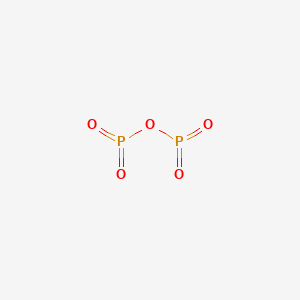
CAS · 1314-56-3
Product Overview
Phosphorus pentoxide is a high-purity pharmaceutical-intermediates supplied for industrial and specialty chemical applications. Contact our team for specifications, packaging options and lead times.
Product Specifications
| Appearance: | White to off-white powder |
|---|---|
| Assay (P₂O₅): | 99% min |
| Active value R: | 1.2 |
| Water insoluble: | 0.02% max |
| Total N: | 0.01% max |
| Heavy metal (Pb): | 0.01% max |
| P₂O₃: | 0.01% max |
| As: | 0.006% max |
| Fe: | 0.003% max |
Applications
1. Dehydration Reagent in Chemical Synthesis
● Powerful Dehydrating Agent: Phosphorus pentoxide is frequently used as a dehydrating agent in organic and inorganic chemistry to remove water from reactions. It is especially effective in dehydrating alcohols to form alkenes and other compounds that require the elimination of water.
● Production of Phosphoric Acid: Reacts with water to form phosphoric acid (H₃PO₄), making it an important intermediate in the production of phosphoric acid.
● In Synthesis of Phosphorylated Compounds: Used to prepare a variety of phosphorylated compounds by facilitating the introduction of phosphate groups into organic molecules.
2. Production of Phosphoric Acid and Derivatives
● Phosphoric Acid Manufacturing: Phosphorus pentoxide is used as a raw material in the industrial production of phosphoric acid through its reaction with water.
● Phosphate Fertilizers: An important precursor in the manufacture of phosphate fertilizers, which are crucial for modern agriculture.
3. Catalysis in Organic Chemistry
● Phosphorus pentoxide丨1314-56-3 is employed as a catalyst in certain organic reactions, including Friedel-Crafts acylations, esterifications, and alkylations, where dehydration or the introduction of phosphate groups is needed.
● Often used in combination with other reagents to catalyze aromatic substitutions or to facilitate specific functional group transformations.
4. Drying Agent in Industrial and Laboratory Processes
● Desiccant: Used to dry gases and solvents, especially in environments where other drying agents like silica gel are less effective.
● Can dry moisture-sensitive substances such as organic compounds and gases by removing trace water content.
5. Chemical Analysis and Laboratory Reactions
● Phosphorus pentoxide is utilized in analytical chemistry for specific tests and titrations where a controlled dehydration reaction is required.
● Used to prepare phosphorus compounds in the lab for research into material science, polymer chemistry, and coordination chemistry.
6. Manufacturing of Refractories and Ceramics
● Refractory Materials: Phosphorus pentoxide is sometimes used in the production of high-temperature resistant refractories and ceramics, as phosphorus-based compounds can improve the performance of materials under extreme conditions.
Benefits
1. Strong Dehydrating Properties
● Highly effective dehydration agent: Its ability to remove water from various compounds is central to many chemical processes, particularly in organic synthesis, where it promotes reactions that require anhydrous conditions.
2. Versatility in Chemical Synthesis
● Its utility as a catalyst and reactant allows it to be used in a wide variety of chemical reactions, making it versatile for both industrial and laboratory applications.
3. Essential in Phosphoric Acid Production
● Serves as a key precursor to phosphoric acid, which is used in the production of fertilizers, food additives, and cleaning agents, contributing to its importance in agriculture and the manufacturing industry.
4. Enhances Reaction Efficiency
● Phosphorus pentoxide helps speed up chemical processes and can increase yields in reactions where the removal of water is critical.
5. Applications in Agriculture
● Phosphorus pentoxide丨1314-56-3, as a source of phosphorus, is integral in producing phosphate-based fertilizers, which are essential for crop growth and soil fertility, supporting global food production.
Conclusion
Phosphorus pentoxide丨1314-56-3 is a highly versatile chemical with applications in organic synthesis, catalysis, dehydration reactions, and the production of phosphoric acid. Its ability to act as a powerful dehydrating agent makes it invaluable in various chemical industries, including the production of fertilizers, ceramics, and specialized materials. However, due to its high reactivity, it must be handled with care, particularly in environments where moisture can trigger dangerous reactions. Its widespread use in both industrial processes and research underscores its importance in modern chemistry and manufacturing.
Previous
Next
Conclusion
A concise summary and suitability assessment for this product is available on request. Contact our team to discuss whether it fits your process and quality requirements.