CAS · 26549-65-5
Product Overview
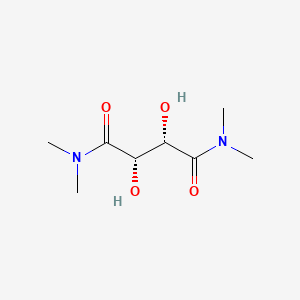
N,N,N,N-Tetramethyl-L-tartramide is a high-purity pharmaceutical-intermediates supplied for industrial and specialty chemical applications. Contact our team for specifications, packaging options and lead times.
Product Specifications
| Appearance: | White or off-white powder or crystalline powder |
|---|---|
| Purity: | 98% min |
| Optical Purity (ee): | 99% min |
| Water Content: | 0.5% max |
Applications
N,N,N,N-Tetramethyl-L-tartramide (CAS 26549-65-5) is a highly functionalized organic compound used as an intermediate in pharmaceuticals, asymmetric synthesis, and fine chemical production. Its tetra-substituted amide structure allows it to act as a chiral auxiliary or ligand in enantioselective reactions, facilitating the synthesis of optically active compounds. In medicinal chemistry, it is employed in the preparation of drug candidates and bioactive molecules, particularly where stereochemistry is critical for activity. Additionally, it can be used in the design of specialty reagents, catalysts, and building blocks for complex heterocycles or polymerizable monomers.
Benefits
The benefits of N,N,N,N-tetramethyl-L-tartramide come from its stereochemically defined, multifunctional structure and high chemical stability. Its L-tartramide backbone provides chirality, which is essential for controlling enantioselectivity in chemical reactions, making it valuable in asymmetric synthesis. The tetramethyl groups enhance solubility and reduce hydrogen-bonding interactions, improving handling and reaction efficiency. Its stability under standard laboratory conditions and compatibility with a variety of reaction media make it a reliable intermediate for both research and industrial applications, facilitating the synthesis of high-value chiral molecules.
Conclusion
N,N,N,N-Tetramethyl-L-tartramide is a versatile chiral intermediate with significant applications in asymmetric synthesis, pharmaceuticals, and fine chemicals. Its combination of stereochemical definition, multifunctionality, and stability allows efficient production of optically active compounds and complex molecular architectures. By enabling precise control over chemical transformations, it continues to play an important role in research, development, and industrial chemistry.
Previous
Tris(trimethylsilyl) Phosphite丨CAS 1795-31-9
Next
2,2,14,14-Tetramethyl-8-oxopentadecanedioic Acid Diethyl Ester丨CAS 738606-43-4