
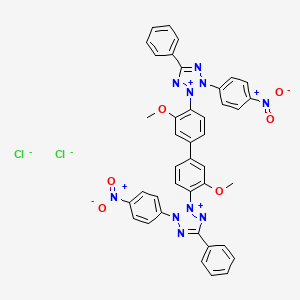
CAS · 298-83-9
Product Overview
Nitrotetrazolium blue chloride is a high-purity analytical-reagents supplied for industrial and specialty chemical applications. Contact our team for specifications, packaging options and lead times.
Product Specifications
| Appearance | Yellow Powder |
|---|---|
| Purity (HPLC) | 98.0% min |
| Water Content (K.F.) | 4.5% max |
| Solubility (5% Methanol) | Yellow transparent solution |
Applications
Biochemical and Cellular Research
Nitrotetrazolium blue chloride丨298-83-9 (NBT) is widely used in biochemical assays to detect cellular metabolic activity. It is commonly utilized in dehydrogenase and oxidoreductase enzyme assays, where it acts as an electron acceptor and forms an insoluble formazan dye upon reduction.
Diagnostics and Medical Testing
NBT is employed in clinical diagnostics, particularly in tests for detecting enzyme activity in medical conditions. It is frequently used in assays such as the nitroblue tetrazolium test for diagnosing chronic granulomatous disease (CGD), a disorder affecting the immune system's ability to kill certain bacteria and fungi.
Oxidative Stress Studies
This compound is used in research related to oxidative stress and reactive oxygen species (ROS) in cells. It helps measure superoxide production in biological samples, providing insights into oxidative damage and mitochondrial function.
Histochemical and Cytochemical Staining
In histochemistry, NBT is applied to stain tissues and cells, enabling researchers to visualize enzyme activity in biological specimens. This application is particularly useful in microbiology, pathology, and neuroscience research.
Benefits
Highly Sensitive for Enzyme Detection
Nitrotetrazolium blue chloride丨298-83-9 is an effective reagent for detecting dehydrogenase and oxidoreductase enzymes, making it valuable for studying metabolic pathways and enzyme kinetics in various biological samples.
Diagnostic Value in Immune Disorders
Its role in detecting chronic granulomatous disease aids in early diagnosis and monitoring of immune deficiencies, helping clinicians manage these conditions effectively.
Essential in Oxidative Stress Research
By acting as a superoxide indicator, NBT contributes to research on cellular oxidative damage, mitochondrial function, and disease mechanisms related to free radical generation.
Versatile Staining Properties
Its application in histochemistry allows detailed visualization of enzyme activity, aiding in medical research and pathology studies.
Conclusion
Nitrotetrazolium blue chloride丨298-83-9 is a crucial reagent in biochemical research, medical diagnostics, and oxidative stress studies. Its ability to detect metabolic activity, assess immune function, and visualize enzyme activity makes it a valuable tool in scientific and medical fields. Its applications in enzyme assays, histochemical staining, and disease diagnostics highlight its significance in research and clinical testing.
Previous
Ethyl (triphenylphosphoranylidene)acetate丨CAS 1099-45-2
Next