
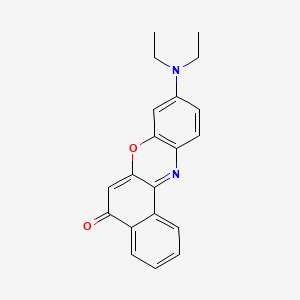
CAS · 7385-67-3
Product Overview
Nile Red is a high-purity biochemical-reagents supplied for industrial and specialty chemical applications. Contact our team for specifications, packaging options and lead times.
Product Specifications
| Appearance | Green to brown powder |
|---|---|
| Assay | 95% min |
| Maximum UV | 553 |
Applications
Nile Red is a lipophilic fluorescent dye extensively used in biological research, analytical chemistry, and material sciences. Its primary application lies in staining intracellular lipid droplets, enabling visualization and quantification of neutral lipids and phospholipids in cells. In microscopy and flow cytometry, it is widely used for lipid imaging due to its high sensitivity and environment-dependent fluorescence. Beyond cell biology, Nile Red serves in environmental studies for detecting microplastics, oils, and hydrophobic pollutants in water samples, as it fluoresces strongly in nonpolar environments. In polymer and material sciences, it is used as a probe to study polarity, molecular organization, and diffusion in complex systems.
Benefits
The benefits of Nile Red stem from its high fluorescence intensity, environment-sensitive emission, and versatility across disciplines. Its ability to selectively fluoresce in hydrophobic environments while being quenched in polar solvents provides excellent contrast and specificity for lipid studies. This property enhances sensitivity in detecting minute lipid changes, aiding research into metabolic disorders, obesity, and lipid-related diseases. Its strong photostability allows prolonged imaging without rapid signal loss, making it suitable for long-term experiments. In environmental science, its application provides a rapid and cost-effective method for detecting pollutants like oils and microplastics, offering significant advantages in ecological monitoring.
Conclusion
In conclusion, Nile Red is a powerful fluorescent dye with broad applications in cell biology, environmental science, and material research. Its benefits include high sensitivity, selective lipid staining, strong photostability, and adaptability to various analytical methods. By combining specificity with versatility, Nile Red has become an indispensable tool for modern research into lipids, pollutants, and molecular interactions.
Previous
Taurodeoxycholic Acid Sodium Salt Monohydrate丨CAS 207737-97-1
Next