
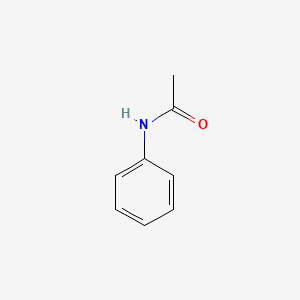
CAS · 103-84-4
Product Overview
N-Phenylacetamide is a high-purity pharmaceutical-intermediates supplied for industrial and specialty chemical applications. Contact our team for specifications, packaging options and lead times.
Product Specifications
| Appearance: | White crystal powder |
|---|---|
| Melting point: | 113–116 °C |
| Phenol: | 100 ppm max |
| Aniline: | 0.10% max |
| Free acid: | 0.1% max |
| Water: | 0.15% max |
| Ash: | 0.05% max |
| Assay: | 99.6% min |
Applications
1. Pharmaceutical Industry
● Historical Use as an Analgesic and Antipyretic:
Acetanilide was one of the first synthetic fever reducers and pain relievers introduced in the 19th century. Although largely replaced by safer alternatives (like paracetamol), it laid the groundwork for modern NSAIDs.
● Intermediate in Drug Synthesis:
N-Phenylacetamide丨CAS 103-84-4 is still used as a starting material or intermediate in the synthesis of:
Paracetamol (acetaminophen)
Certain sulfa drugs and antimicrobial agents
Dye-interacting pharmaceuticals (via azo coupling reactions)
2. Dye and Pigment Industry
● Precursor in Azo Dye Manufacturing:
Acetanilide is commonly used in the preparation of azo dyes, where the aniline-like moiety undergoes diazotization and coupling with phenols or aromatic amines to produce vivid pigments used in:
Textile dyeing
Inks
Plastic coloration
3. Rubber and Plastic Additives
● Stabilizer and Antioxidant:
N-Phenylacetamide丨CAS 103-84-4 can be used as an antioxidant additive in rubber and PVC formulations to help prevent degradation from heat and UV exposure.
● Plasticizer Intermediate:
Acetanilide can act as a chemical intermediate for creating more complex additives or modifiers in polymer processing.
4. Agrochemicals
● Pesticide Intermediate:
Acetanilide derivatives serve as key intermediates in the synthesis of certain herbicides and fungicides. Modifications of the phenyl ring or the acetamide group yield active ingredients with targeted biological properties.
5. Laboratory Reagent and Organic Synthesis
● Model Compound for Reaction Studies:
It is often used in academic labs to demonstrate nucleophilic substitution, reduction, hydrolysis, and acetylation reactions.
● Purification Reference (Crystallization Practice):
Due to its well-defined melting point and relatively easy crystallization, it's a popular compound used in teaching recrystallization techniques.
Benefits
1. Structural Simplicity, High Reactivity
● The simple acetamide structure offers versatile sites for substitution, making it a useful synthetic intermediate in both fine chemical and bulk chemical production.
2. Good Stability and Safety Profile (with proper handling)
● Acetanilide is chemically stable, easily handled, and widely available, although it is not used medicinally today due to toxicity concerns at high doses (especially risk of methemoglobinemia).
3. Cost-Effective for Bulk Applications
● Due to its low production cost, it remains viable in dye, rubber, and industrial chemical markets.
4. Educational Value
● Acetanilide is a model compound in organic chemistry labs and educational settings to teach fundamental principles of organic reactions and purification methods.
Conclusion
N-Phenylacetamide丨CAS 103-84-4 is a versatile organic compound with wide applications in the pharmaceutical, dye, plastic, and agrochemical industries. While its historical use as a drug has been discontinued, its role as a precursor and intermediate in the synthesis of numerous industrial and specialty chemicals remains significant. With its good chemical reactivity, affordability, and educational value, acetanilide continues to hold a firm place in chemical manufacturing and research.
Previous
Next
2,2-Azobis(2-methylpropionamidine) Dihydrochloride丨CAS 2997-92-4
Conclusion
A concise summary and suitability assessment for this product is available on request. Contact our team to discuss whether it fits your process and quality requirements.