CAS · 3396-99-4
Product Overview
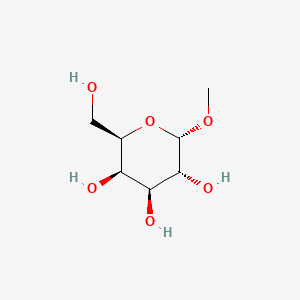
Methyl alpha-D-galactopyranoside is a high-purity pharmaceutical-intermediates supplied for industrial and specialty chemical applications. Contact our team for specifications, packaging options and lead times.
Product Specifications
| Appearance: | White or almost white / White powder |
|---|---|
| Assay: | 98.0% Min |
| Identification: | Positive |
| Specific optical rotation: | +175° to +181° |
| Water content (K-F): | 10.2% Max |
| Heavy metals: | 20 ppm Max |
Applications
1. Biochemical Research
Used as a non-metabolizable sugar analog in carbohydrate metabolism studies.
Helps in receptor binding studies to understand sugar recognition by lectins and other carbohydrate-binding proteins.
2. Cell Biology and Glycobiology
Serves as a model compound in studies of galactose transport and uptake in cells.
Frequently used in the development of affinity chromatography media for isolating galactose-binding proteins.
3. Microbiology and Enzyme Activity Testing
Used as a substrate analog to study enzyme specificity, especially for galactosidases.
Supports research into bacterial metabolism and sugar uptake mechanisms.
4. Pharmaceutical and Nutritional Research
Applied in drug design research targeting glycan-mediated interactions (e.g., in cancer or pathogen adhesion).
Used in the study of lactose intolerance and galactosemia pathways.
5. Cosmetics and Personal Care
Investigated for use in hydrating and skin-conditioning formulations, as sugar derivatives often have moisturizing properties.
Benefits
Stable Sugar Analog: More stable than free D-galactose, making it suitable for long-term studies and storage.
High Water Solubility: Allows easy formulation in aqueous solutions for biochemical assays.
Non-toxic and Biocompatible: Safe for use in cell cultures and in vivo animal studies.
Versatile Tool in Research: Useful across multiple disciplines from molecular biology to pharmaceutical development.
Conclusion
Methyl α-D-galactopyranoside (CAS 3396-99-4) is a valuable sugar derivative used extensively in biochemical, cellular, and microbiological research. Its role as a non-metabolizable analog of galactose makes it ideal for investigating carbohydrate recognition, enzyme specificity, and sugar transport mechanisms. With its high solubility and biocompatibility, it continues to be a useful tool in both academic research and applied sciences.
Previous
3-Methoxybenzoyl Chloride丨CAS 1711-05-3
Next
4-Amino-5-chloro-2,3-dihydro-7-benzofurancarboxylic Acid丨CAS 123654-26-2