
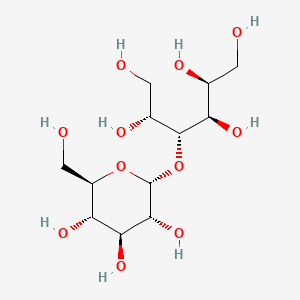
CAS · 585-88-6
Product Overview
Maltitol is a high-purity food-additives supplied for industrial and specialty chemical applications. Contact our team for specifications, packaging options and lead times.
Product Specifications
| Grade | FCC grade |
|---|---|
| Appearance | white to off white crystalline powder |
| Assay | 99%min |
| Particle size | 95% minimum passes through No.30 mesh screen (600 Mic) |
| Water | 0.3%max |
| Reducing Sugars (as glucose) | 0.1%max |
| Residue on ignition | 0.1%max |
| Specific optical rotation | +105.5 to +108.5 deg |
| Lead | 0.5 mg/kg max |
| Nickel | 1 mg/kg max |
| Ar | 1 mg/kg max |
| Sulfate | 100 mg/kg max |
| Chloride | 50 mg/kg max |
| Heavy metal | 5 mg/kg max |
| Conductivity | 20 us.cm-1 |
| Mp | 148 to 151 deg C |
Applications
Maltitol is widely used in the food, nutraceutical, and pharmaceutical industries as a sugar substitute and functional polyol. In food manufacturing, it is applied in sugar-free or reduced-sugar products such as chocolates, candies, baked goods, chewing gums, and beverages due to its sweetness profile, which closely resembles sucrose. It helps improve texture, moisture retention, and mouthfeel in confectionery and bakery formulations. In nutritional products, Maltitol is used in low-glycemic and low-calorie formulations, including diabetic-friendly foods, meal replacements, and protein bars. In pharmaceuticals, it functions as a sweetening agent in syrups, chewable tablets, lozenges, and oral suspensions, providing palatability without significant impact on blood sugar. Its humectant properties also support stability and softness in various dosage forms. Additionally, Maltitol is used in research related to carbohydrate digestion, glycemic response, and formulation science involving polyols.
Benefits
Maltitol offers several advantages that contribute to its broad acceptance as a sugar alternative. Its sweetness level, approximately 90 percent of sucrose, allows effective replacement without drastic reformulation or flavor adjustments. It provides fewer calories than sugar and has a significantly lower glycemic index, making it suitable for individuals managing blood glucose levels or seeking reduced-calorie products. Maltitol does not contribute to dental caries, offering oral health benefits in sugar-free chewing gums and confectionery. Its physical properties, including good solubility, heat stability, and moisture retention, improve texture and shelf life in food and pharmaceutical formulations. It also helps maintain smoothness, reduced crystallization, and desirable melt characteristics in chocolate and candy products. Its neutral flavor profile enhances formulation versatility across various product categories.
Conclusion
Maltitol is a widely used and versatile polyol that provides sweetness, functional performance, and reduced calorie impact in food, nutritional, and pharmaceutical applications. Its favorable sensory characteristics, low glycemic response, and stability make it a dependable alternative to sucrose in product development. Overall, Maltitol supports the creation of health-oriented, sugar-reduced formulations while maintaining desirable taste and texture, making it a valuable ingredient across multiple industries.
Previous
Next