
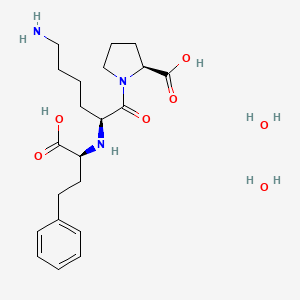
CAS · 83915-83-7
Product Overview
Lisinopril is a high-purity a-api supplied for industrial and specialty chemical applications. Contact our team for specifications, packaging options and lead times.
Product Specifications
| Grade | EP10.0 |
|---|---|
| Appearance | White or almost white, crystalline powder |
| Assay (calculated on anhydrous substance) | 98.5%~101.5% |
| Residual solvents | 5000 ppm max |
| Solubility | Soluble in water, practically insoluble in anhydrous ethanol and heptane |
| Specific optical rotation | -47°~43° |
| Identification | IR spectrum in accordance with CRS |
| Water | 8.0%~9.5% |
| Impurity A | 0.2% max |
| Impurity E | 0.2% max |
| Impurity F | 0.2% max |
| Impurity G | 0.15% max |
| Related substances - Unspecified impurities | 0.10% max |
| Related substances - Total impurities | 0.5% max |
| Sulphated ash | 0.1% max |
Applications
Lisinopril is widely used in clinical settings for treating high blood pressure (hypertension), congestive heart failure, and for improving survival rates after heart attacks. It is also prescribed to prevent kidney damage in patients with diabetes mellitus, particularly in those with proteinuria, by reducing intraglomerular pressure. In pharmaceutical research, lisinopril serves as a model compound for the development of ACE inhibitors and other cardiovascular therapeutics, helping chemists design new drugs with improved potency, selectivity, and pharmacokinetic properties. Its well-characterized safety profile and efficacy make it a standard reference in cardiovascular and nephrology studies.
Benefits
The key benefits of lisinopril lie in its effective ACE inhibition, leading to lower blood pressure, reduced cardiac workload, and improved renal protection. It is orally active, allowing convenient administration without the need for injections. Lisinopril has a predictable pharmacokinetic profile, including a relatively long half-life, which supports once-daily dosing for patient compliance. It demonstrates a low incidence of adverse metabolic effects compared with other antihypertensive classes, such as diuretics or beta-blockers, and provides added benefits in reducing the progression of diabetic nephropathy. Its stability and reproducible therapeutic effects make it highly reliable in both clinical and research contexts.
Conclusion
Lisinopril is a clinically important ACE inhibitor widely used to manage hypertension, heart failure, and renal complications in diabetic patients. Its oral bioavailability, efficacy, and safety profile make it a cornerstone of cardiovascular therapy. As cardiovascular diseases remain a leading health concern, lisinopril continues to play a critical role in both patient care and pharmaceutical research focused on ACE inhibition and cardiovascular protection.
Previous
Calcium Dobesilate丨CAS 20123-80-2
Next