
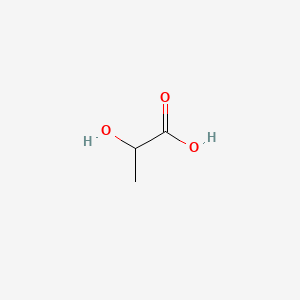
CAS · 50-21-5
Product Overview
Lactic acid丨50-21-5 is a natural organic acid that occurs in biological systems, especially in fermented foods, dairy products, and muscle metabolism. It is a weak acid commonly found in food, pharmaceuticals, cosmetics, and industrial processes. Due to its biodegradable, non-toxic, and renewable nature, it has broad applications in multiple industries.
Product Specifications
| Property | Specification |
|---|---|
| Grade | BP2000/USP28/FCC IV |
| Appearance | Colourless or slightly yellow, syrupy liquid |
| Molecular Weight | 90.08 g/mol |
| Content | 80.0% - 92.0% |
| Specific Optical Rotation | -5° to +5° |
| Density (@20℃) | 1.20 - 1.30 g/ml |
| Refractive Index (20℃) | 1.42 - 1.43 |
| Odour | Slightly acid |
| Taste | Mild acid |
| Solubility | Miscible with water and with ethanol (96%) |
| Heavy Metals (as Pb) | 10 ppm max. |
| Iron | 10 ppm max. |
| Calcium | 10 ppm max. |
| Chloride | 10 ppm max. |
| Sulphate | 10 ppm max. |
| Sulphated Ash | 0.05% max. |
| Cyanide | 5 ppm max. |
| Lead | 0.5 ppm max. |
| Reducing Substances (Sugars) | Passes FCC test |
| Citric, Oxalic, Tartaric, Phosphoric Acids | Passes USP test |
| Heat-Resistance Temperature (℃) | / |
Applications
1. Food and Beverage Industry
● Food Preservative and pH Regulator: Used as a natural preservative, acidity regulator, and flavoring agent in processed foods and beverages.
● Dairy Products: Naturally present in yogurt, cheese, and fermented milk products due to bacterial fermentation.
● Beverages: Used in beer brewing, soft drinks, and fermented drinks like kombucha to enhance taste and stability.
● Meat Processing: Applied to meat products as an antibacterial agent to prevent spoilage.
2. Pharmaceutical and Medical Applications
● IV Fluids and Electrolyte Solutions: Lactic acid丨50-21-5 is used in Ringer's lactate solution, which is administered for hydration and electrolyte balance in medical treatments.
● Pharmaceutical Synthesis: Acts as a precursor for drug formulations and topical medications.
● Dermatology: Used in chemical peels and skin treatments to improve cell turnover, treat hyperpigmentation, and reduce fine lines.
3. Cosmetics and Personal Care
● Moisturizers and Anti-Aging Products: Lactic acid is a part of alpha hydroxy acids (AHAs), which help in exfoliation, skin hydration, and brightening.
● Shampoos and Conditioners: Regulates pH and enhances hair smoothness.
● Oral Care: Found in toothpaste and mouthwashes for plaque prevention.
4. Biodegradable Plastics (PLA - Polylactic Acid)
● Eco-Friendly Packaging: Lactic acid is used in the production of polylactic acid (PLA), a biodegradable plastic that is an alternative to petroleum-based plastics.
● Medical Sutures and Implants: PLA-based products, derived from lactic acid, are used in biodegradable medical implants, stitches, and controlled drug release systems.
5. Agriculture and Animal Feed
● Silage Preservation: Helps maintain pH stability in silage, preventing spoilage in animal feed.
● Growth Promoter in Livestock: Used in animal feed formulations to improve gut health and digestion.
6. Industrial and Chemical Processing
● Leather and Textile Industry: Used in tanning and dyeing fabrics to soften leather and enhance color absorption.
● Cleaning and Detergents: An ingredient in eco-friendly cleaners and descaling agents to remove lime deposits, soap scum, and mineral buildup.
Benefits
✅ Natural and Biodegradable
● Sourced from fermentation, making it a sustainable and eco-friendly chemical.
✅ Non-Toxic and Safe for Human Use
● Widely used in food, skincare, and medicine without harmful effects.
✅ Antimicrobial Properties
● Inhibits the growth of harmful bacteria, making it a great food preservative and skincare ingredient.
✅ Versatile Industrial Uses
● Plays a role in biodegradable plastics, food processing, pharmaceuticals, and agriculture.
✅ Skin and Health Benefits
● Helps in skin renewal, hydration, and anti-aging, making it a valuable cosmetic ingredient.
Conclusion
Lactic acid丨50-21-5 is a multi-functional organic acid used in food, pharmaceuticals, cosmetics, biodegradable plastics, and agriculture. Its natural, biodegradable, and antimicrobial properties make it an essential eco-friendly compound for industrial and consumer applications.
Previous
Next