
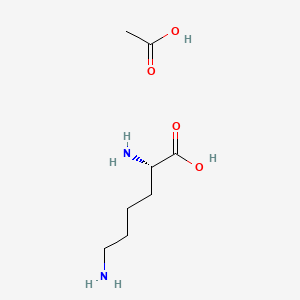
CAS · 57282-49-2
Product Overview
L-Lysine monoacetate is a high-purity a-api supplied for industrial and specialty chemical applications. Contact our team for specifications, packaging options and lead times.
Product Specifications
| Grade | USP-32 |
|---|---|
| Appearance | White crystals or crystalline powder |
| Assay | 98.5%~102.0% |
| Specific rotation [α]D | +8.4°~+9.9° |
| Loss on drying | 0.2% max |
| Residue on ignition | 0.4% max |
| Chloride (Cl) | 0.05% max |
| Sulfate (SO4) | 0.03% max |
| Iron (Fe) | 0.003% max |
| Heavy metals (Pb) | 0.0015% max |
| Chromatographic purity | Not more than 0.5% of any individual impurity is found; Not more than 2.0% of total impurities is found. |
Applications
1. Nutritional Supplement (Animal Feed Grade)
Primary use is as a feed additive in animal nutrition, especially for:
Poultry
Swine
Aquaculture
Ruminants (to a lesser extent)
Acts as a bioavailable source of lysine, which is often the first limiting amino acid in grain-based diets.
The acetate form enhances stability, solubility, and absorption in the gastrointestinal tract.
2. Human Nutritional Supplements
Sometimes used in nutraceuticals or sports nutrition products as a source of L-lysine:
Helps in protein synthesis
Supports immune function
Promotes collagen formation
Aids in calcium absorption and bone health
The acetate salt improves taste and digestibility compared to L-lysine HCl.
3. Pharmaceutical Intermediate
Serves as an intermediate or excipient in the formulation of some oral medications or parenteral nutrition solutions.
Used in amino acid infusion solutions for clinical or hospital nutrition.
4. Fermentation and Cell Culture
Provides an amino nitrogen source in microbial fermentation media and cell culture formulations.
5. Cosmetic and Personal Care Products
May appear as a conditioning agent or pH regulator in some skin or hair care products due to the amino acid's hydrophilic and buffering properties.
Benefits
✅ High Bioavailability
L-Lysine monoacetate is readily absorbed and metabolized by animals and humans.
The acetate counter-ion is non-toxic and metabolized efficiently via the TCA cycle.
✅ Improved Stability and Handling
More chemically stable than L-lysine base.
Less corrosive and more storage-friendly than L-lysine HCl.
Easier to handle during manufacturing of premixes or feeds.
✅ Better Taste Profile
Compared to L-lysine HCl, the monoacetate form has a milder taste, making it more acceptable in oral formulations.
✅ Supports Growth and Productivity
Supplementing with L-lysine monoacetate helps:
Improve feed efficiency
Enhance muscle protein synthesis
Increase weight gain and lean meat yield in livestock
✅ Essential for Tissue Repair and Immune Health
As an essential amino acid, lysine supports:
Collagen formation (important for skin, cartilage, and joints)
Antibody production
Wound healing and recovery from injuries
Conclusion
L-Lysine monoacetate (CAS 57282-49-2) is a valuable compound used primarily as a nutritional supplement for both animals and humans. With improved solubility, digestibility, and stability compared to other lysine salts, it offers practical benefits in animal feed, pharmaceutical, and clinical nutrition applications. Its essential role in growth, immune function, and protein metabolism makes it a critical additive in health-focused formulations and performance-enhancing diets.
Previous
Next