
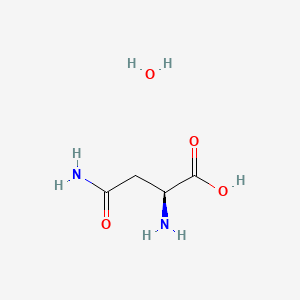
CAS · 5794-13-8
Product Overview
L(+)-Asparagine monohydrate is a high-purity amino-acids supplied for industrial and specialty chemical applications. Contact our team for specifications, packaging options and lead times.
Product Specifications
| Grade | AJI92 |
|---|---|
| Appearance | White crystals or crystalline powder |
| Assay | 99.0~101.0% |
| pH | 4.4~6.4 |
| Specific Rotation [α]D20 | +34.3° ~ +36.5° |
| State of Solution (Transmittance T430) | 98% min |
| Chloride (Cl) | 0.02% max |
| Ammonium (NH4) | 0.10% max |
| Sulfate (SO4) | 0.02% max |
| Iron (Fe) | 10ppm max |
| Heavy Metals (Pb) | 10ppm max |
| Arsenic (As) | 1ppm max |
| Other Amino Acids | Conforms |
| Loss on Drying | 11.5%~12.5% |
| Residue on Ignition | 0.10% max |
| Total Plate Count | 1000 cfu/g max |
| Yeast and Moulds | 100 cfu/g max |
| Particle Size Range | NLT 100% through 20 mesh |
Applications
Pharmaceutical Industry
L(+)-Asparagine monohydrate丨5794-13-8 is widely used in the development of pharmaceutical products. It is a key component in cell culture media, essential for growing cells used in biologic drug production. This amino acid plays a role in protein synthesis, making it valuable in treatments for metabolic disorders and tissue regeneration. Additionally, it is studied for potential use in neurodegenerative disease research, as it influences neurotransmitter activity.
Food and Beverage Industry
In the food sector, this compound is used to understand and manage the formation of acrylamide, a byproduct of cooking starchy foods at high temperatures. While acrylamide is considered a food safety concern, L(+)-Asparagine monohydrate helps in studying its formation and developing strategies to reduce its levels in processed foods. It is also used as a nutritional additive in dietary supplements and fortified foods to enhance amino acid intake.
Biochemical Research
This compound is frequently used in biochemical studies related to nitrogen metabolism. It serves as a model substance for research on amino acid biosynthesis and enzymatic functions. Scientists use it to examine metabolic pathways in various organisms, including its role in nitrogen transport and storage. Research in agricultural sciences also explores its influence on plant metabolism and development.
Biotechnology and Industrial Microbiology
L(+)-Asparagine monohydrate丨5794-13-8 is an important component in microbial culture media. It supports the growth of bacteria and fungi used in fermentation-based production of antibiotics and other bioactive compounds. By optimizing microbial growth conditions, it enhances the efficiency of industrial bioprocesses.
Medical and Nutritional Applications
This amino acid is used in medical research related to neurological function. Studies suggest it may contribute to neurotransmitter regulation, potentially offering benefits for cognitive health. It is also included in some sports nutrition products to support muscle recovery and endurance, as it plays a role in protein synthesis and energy metabolism.
Agricultural Applications
In agriculture, L(+)-Asparagine monohydrate is examined for its effects on plant nitrogen metabolism. As a crucial nitrogen carrier, it influences plant growth and productivity. Understanding its role in plant biochemistry helps in developing nutrient formulations that improve crop yield and quality.
Benefits
Supports Protein Synthesis
As a fundamental amino acid, L(+)-Asparagine monohydrate丨5794-13-8 contributes to protein formation, essential for cell growth and repair. This makes it useful in medical, nutritional, and biotechnological applications.
Enhances Cell Growth in Culture Media
Its inclusion in culture media promotes the growth of mammalian and microbial cells, supporting pharmaceutical research and industrial microbiology. This benefit is particularly valuable in the production of biologics and antibiotics.
Contributes to Neurotransmitter Regulation
Studies suggest that asparagine plays a role in the nervous system, potentially influencing cognitive function and neuroprotection. Its involvement in neurotransmitter balance makes it relevant for neurological research.
Plays a Role in Metabolic Processes
L(+)-Asparagine monohydrate participates in nitrogen transport and metabolism, affecting energy production and cellular function. This property is important in biochemical and agricultural research.
Improves Nutritional Profiles
In food and dietary supplements, this amino acid is used to enhance the nutritional value of products. It supports amino acid balance in fortified foods and sports nutrition formulations.
Optimizes Fermentation Processes
Its presence in fermentation media boosts the yield of microbial products, making it essential in biotechnology and industrial microbiology applications.
Aids in Agricultural Development
By influencing nitrogen metabolism in plants, it contributes to improved growth and productivity, benefiting agricultural research and crop management.
Conclusion
L(+)-Asparagine monohydrate丨5794-13-8 is a versatile compound with diverse applications across pharmaceuticals, food science, biotechnology, and agriculture. Its biochemical properties support essential metabolic functions, making it valuable in both industrial and scientific fields.
Previous
Next