
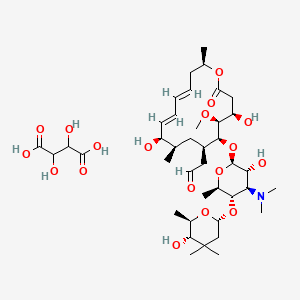
CAS · 37280-56-1
Product Overview
Kitasamycin tartrate is a high-purity a-api supplied for industrial and specialty chemical applications. Contact our team for specifications, packaging options and lead times.
Product Specifications
| Grade: | USP |
|---|---|
| Appearance: | White powder |
| Assay: | 97.0% - 102.0% |
| Identification: | Infrared spectrum should conform |
| Chromatographic purity: | Should conform |
| Loss on drying: | 0.5% max |
| Residue on ignition: | 0.1% max |
Applications
Kitasamycin tartrate is a macrolide antibiotic used extensively in veterinary medicine and, in some cases, as a research compound in microbiology. It exhibits strong antibacterial activity against Gram-positive bacteria, mycoplasmas, and certain Gram-negative organisms by inhibiting bacterial protein synthesis through binding to the 50S ribosomal subunit. It is widely applied in the prevention and treatment of respiratory, intestinal, and reproductive infections in livestock and poultry, such as Mycoplasma gallisepticum, Pasteurella multocida, and Streptococcus infections. Additionally, it is sometimes used as a feed additive to promote animal growth and improve feed efficiency under veterinary regulatory guidelines.
Benefits
Kitasamycin tartrate offers several key advantages as an antimicrobial agent. It provides broad-spectrum antibacterial activity with relatively low toxicity and minimal side effects when used appropriately. The tartrate salt form enhances its solubility and stability, improving absorption and bioavailability in oral formulations. Compared to other macrolides, Kitasamycin demonstrates strong efficacy at low concentrations, excellent tissue penetration, and a lower likelihood of inducing bacterial resistance. Its favorable pharmacokinetic profile supports sustained antibacterial action, reducing dosing frequency and improving treatment compliance.
Conclusion
Kitasamycin tartrate is a highly effective and reliable macrolide antibiotic widely employed in veterinary medicine for disease prevention and control. Its potent antibacterial spectrum, good safety profile, and high bioavailability make it a valuable tool in maintaining animal health and productivity. Additionally, its role as a key research compound in antibiotic studies highlights its continued importance in both applied and scientific contexts.
Previous
Next