
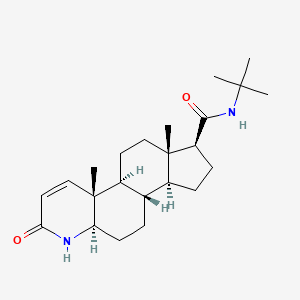
CAS · 98319-26-7
Product Overview
Finasteride丨98319-26-7 is a synthetic medication primarily used to treat conditions related to male hormonal imbalances. It is a 5-alpha-reductase inhibitor, meaning it works by blocking the enzyme 5-alpha-reductase that converts testosterone into its more potent form, dihydrotestosterone (DHT). This enzyme is implicated in several key conditions, including benign prostatic hyperplasia (BPH) and male pattern baldness. By reducing the levels of DHT, finasteride addresses these conditions by targeting the underlying hormonal causes.
Finasteride丨98319-26-7 has been widely studied and approved for use in treating hair loss and enlarged prostate. It is marketed under various brand names, with Propecia being the most commonly known for its use in hair loss treatment, and Proscar used for prostate enlargement.
Product Specifications
| Property | Specification |
|---|---|
| Grade | USP42 Grade |
| Appearance | White or off-white crystalline powder |
| Assay | 98.5% to 101.0% |
| Solubility | Freely soluble in methylene chloride and in alcohol; partially insoluble in water |
| Identification | a. IR-Spectrum matches with working standard b. HPLC matches with working standard |
| Specific rotation | -56° to -60° |
| Water | 0.3% max |
| Residue on ignition | 0.1% max |
| Heavy metals | 10 μg/g max |
| Relative material | Maximum single impurity: 0.5% max Total impurities: 1.0% max |
| Residual solvents | Meets the requirements |
Applications
1. Treatment of Benign Prostatic Hyperplasia (BPH)
● Prostate Enlargement: Finasteride is commonly prescribed for benign prostatic hyperplasia (BPH), a non-cancerous enlargement of the prostate gland that occurs as men age. As the prostate enlarges, it can exert pressure on the urethra, leading to difficulties with urination, such as frequent urination, nocturia (waking up at night to urinate), weak urine flow, and incomplete bladder emptying.
● Mechanism of Action in BPH: Finasteride works by reducing the levels of DHT in the prostate gland. DHT is a potent androgen that is involved in the growth and enlargement of the prostate. By inhibiting the 5-alpha-reductase enzyme, finasteride helps reduce prostate size, improving symptoms related to urinary flow and reducing the need for surgical intervention in severe cases.
● Long-term Benefits: Studies have shown that finasteride can reduce the prostate volume and improve urinary symptoms over time. It can also reduce the risk of acute urinary retention and the need for prostate surgery in men with moderate to severe BPH.
2. Treatment of Male Pattern Baldness (Androgenetic Alopecia)
● Hair Loss in Men: Finasteride is widely used to treat male pattern baldness (androgenetic alopecia), a condition characterized by progressive hair thinning and hair loss on the scalp, especially along the crown and at the temples. The primary cause of male pattern baldness is the action of DHT on the hair follicles, which causes them to shrink and ultimately stop producing hair.
● Mechanism of Action in Hair Loss: By inhibiting the conversion of testosterone to DHT, finasteride prevents the hormone from binding to androgen receptors in the hair follicles. This can slow down or reverse the hair loss process, leading to a regrowth of hair and a thicker hair appearance. It is generally most effective in men with early to moderate hair loss.
● Efficacy: Clinical studies have shown that finasteride can help halt hair loss, promote hair regrowth, and increase hair density in men with androgenetic alopecia. It is typically taken in a daily oral dose of 1 mg for hair loss, with results typically visible within 3 to 6 months of consistent use.
3. Potential Use in Women (Off-Label)
While Finasteride丨98319-26-7 is not FDA-approved for use in women, particularly in those of childbearing age, some off-label use has been explored, especially for women experiencing female pattern hair loss (FPHL) or hirsutism (excessive male-pattern hair growth). In some cases, finasteride has been used to manage hormonal hair loss in women, especially after menopause, although it is less commonly prescribed for this purpose due to potential side effects and safety concerns.
4. Prostate Cancer Prevention
● Cancer Prevention Research: There has been interest in the use of finasteride in the prevention of prostate cancer, particularly in men at high risk for developing the disease. Some studies suggest that finasteride may reduce the risk of low-grade prostate cancer by decreasing DHT levels. However, the drug has also been shown to be ineffective in reducing the risk of high-grade prostate cancer, and its use for cancer prevention remains controversial.
● Side Effects and Risks: While Finasteride丨98319-26-7 may help prevent some forms of prostate cancer, it has also been associated with an increased risk of high-grade cancers in certain populations. Therefore, its use for cancer prevention is not generally recommended, and the potential benefits must be carefully weighed against the risks.
Benefits
1. Relieves Symptoms of BPH
One of the most significant benefits of finasteride is its ability to provide symptomatic relief for men suffering from benign prostatic hyperplasia (BPH). By reducing the size of the prostate, finasteride can alleviate symptoms such as difficulty urinating, frequent urination, weak urine stream, and the need to urinate during the night. It can improve urinary flow rate and reduce the frequency of urinary retention episodes, leading to a better quality of life for men with BPH.
2. Effective in Treating Male Pattern Baldness
Finasteride丨98319-26-7 is one of the few medications that has been proven to be effective in treating male pattern baldness. For men experiencing hair loss due to androgenetic alopecia, finasteride can stop hair thinning, promote hair regrowth, and improve hair density. Studies have shown that approximately 80% of men who take finasteride for hair loss experience either a halt in hair loss or some regrowth of hair.
● Prevention of Further Hair Loss: One of the major benefits of finasteride is its ability to prevent further hair loss. By blocking the action of DHT, finasteride halts the progression of hair thinning, which can be especially helpful for men who want to maintain their current hairline or reduce further shedding.
3. Non-Invasive Treatment Option
Finasteride offers a non-invasive treatment option for men with BPH or male pattern baldness, as it is taken orally in pill form. This makes it an attractive alternative to surgical procedures or hair transplants. For men who may not want to undergo surgery or other more invasive treatments, finasteride can offer a convenient and relatively low-risk option for managing both prostate health and hair loss.
4. Long-Term Benefits for Prostate Health
For men with benign prostatic hyperplasia (BPH), finasteride provides long-term benefits, including the potential to reduce the need for prostate surgery. It works by reducing prostate volume, which can relieve the pressure on the urethra and improve urinary function. This can help avoid the complications associated with more invasive treatments, such as transurethral resection of the prostate (TURP), and reduce the need for hospitalizations due to urinary retention.
5. Low Risk of Serious Side Effects
While finasteride does have some side effects, including sexual dysfunction (e.g., decreased libido, erectile dysfunction, and ejaculatory disorders), these side effects are generally rare and reversible once the medication is discontinued. Most men tolerate finasteride without significant issues. Its low risk profile compared to invasive surgical procedures or other more aggressive treatments makes it a popular choice for managing both hair loss and prostate enlargement.
Conclusion
Finasteride丨98319-26-7 is a valuable medication for treating benign prostatic hyperplasia and male pattern baldness. As a 5-alpha-reductase inhibitor, it reduces the levels of dihydrotestosterone (DHT), providing symptomatic relief for prostate issues and promoting hair regrowth in men with androgenetic alopecia.
While finasteride is effective and well-tolerated for many, potential side effects, particularly related to sexual function, should be considered. Additionally, it is not recommended for use in women who are pregnant or planning to become pregnant. Despite these considerations, finasteride remains one of the most effective treatments available for both BPH and male pattern baldness, with ongoing research continuing to explore its broader applications in health and medicine.
Previous
Next