
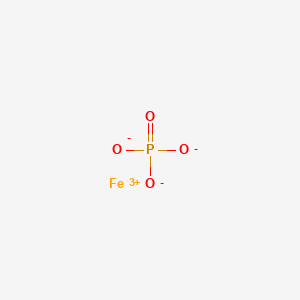
CAS · 10045-86-0
Product Overview
Ferric phosphate is a high-purity biochemical-reagents supplied for industrial and specialty chemical applications. Contact our team for specifications, packaging options and lead times.
Product Specifications
| Grade | Industrial grade |
|---|---|
| Appearance | Grayish white to pinkish powder |
| Iron (Fe) | 35 ~ 36% |
| Phosphorus (P) | 20.0 ~ 21.0% |
| Sodium (Na) | 100 ppm/w max |
| Potassium (K) | 100 ppm/w max |
| Aluminum (Al) | 100 ppm/w max |
| Magnesium (Mg) | 100 ppm/w max |
| Manganese (Mn) | 300 ppm/w max |
| Calcium (Ca) | 100 ppm/w max |
| Cadmium (Cd) | 100 ppm/w max |
| Lead (Pb) | 15 ppm/w max |
| Arsenic (As) | 15 ppm/w max |
| Mercury (Hg) | 3 ppm/w max |
| Chloride (Cl-) | 200 ppm/w max |
| Sulfur (as SO4²⁻) | 100 ppm/w max |
| Loss on Drying | 2.0% max |
Applications
Ferric phosphate is an inorganic compound widely used in agriculture, food, water treatment, and material science. In agriculture, it serves as an environmentally friendly molluscicide for controlling slugs and snails in crops and gardens. It is also applied as a micronutrient fertilizer to provide bioavailable iron, improving plant growth and chlorophyll production in iron-deficient soils. In the food industry, ferric phosphate is used as a source of dietary iron in fortified foods and supplements, contributing to the prevention of iron deficiency anemia. Additionally, it finds applications in water treatment, where it functions as a coagulant and phosphate source in water conditioning and purification processes. Ferric phosphate is also utilized in material science for producing ceramics, pigments, and corrosion-resistant coatings.
Benefits
The benefits of ferric phosphate arise from its low toxicity, stability, and multifunctional properties. As a molluscicide, it is safer for non-target organisms and the environment compared to traditional chemical pesticides. Its iron content provides a bioavailable source for both plants and dietary supplementation, supporting health and agricultural productivity. Ferric phosphate exhibits good chemical stability, low solubility in water, and ease of handling, making it suitable for controlled release in agricultural and food applications. Its compatibility with various formulation types, including powders, granules, and aqueous suspensions, enhances versatility in industrial and research use. Additionally, its ability to serve both as a nutrient and functional material adds value across multiple sectors.
Conclusion
Ferric phosphate is a versatile inorganic compound with broad applications in agriculture, nutrition, water treatment, and materials science. Its low toxicity, bioavailable iron content, and chemical stability make it an effective solution for plant nutrition, dietary supplementation, and environmentally friendly pest control. By supporting sustainable agriculture, improved nutrition, and industrial material applications, ferric phosphate continues to play an important role in modern chemical, agricultural, and nutritional industries.
Previous
1,7-Phenanthroline丨CAS 230-46-6
Next