
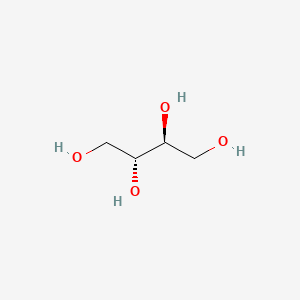
CAS · 149-32-6
Product Overview
Erythritol is a high-purity feed-additives supplied for industrial and specialty chemical applications. Contact our team for specifications, packaging options and lead times.
Product Specifications
| Property | Specification |
|---|---|
| Grade | GB 26404-2011 |
| Appearance | White crystalline powder or particles with no visible impurities to the naked eye |
| Erythritol content (on a dry basis) | 99.5% - 100.5% |
| Ribosol and glycerol (on a dry basis) | 0.1% max |
| Reducing sugar (calculated as glucose) | 0.3% max |
| Drying weight loss | 0.2% max |
| pH | 5.0 ~ 7.0 |
| Melting point | 119 ~ 123 °C |
| Burning residue | 0.1% max |
| Heavy metals (calculated as lead) | 5.0 mg/kg max |
| Total arsenic (calculated as As) | 0.3 mg/kg max |
| Lead | 0.5 mg/kg max |
| Total colony count | 100 cfu/g max |
| Mold | 10 cfu/g max |
| Yeast | 10 cfu/g max |
| Escherichia coli | 0.3 MPN/g max |
| Pathogenic bacteria (Salmonella, Shigella, Staphylococcus aureus) | Cannot be detected |
| Particle size | 14 ~ 30 mesh |
| Taste | Sweet |
Applications
1. Food and Beverage Industry
Erythritol is most commonly used as a sugar substitute in low-calorie, sugar-free, and diabetic-friendly products.
● Sweetening agent: Used in a wide range of products, such as baked goods, sugar-free candies, chocolates, beverages, and ice creams. It provides the sweetness of sugar without the associated calories or glycemic spike.
● Bulk sweetener: Functions as a bulk sweetener in formulations where sugar is needed for texture or consistency, particularly in dietary foods or low-carb snacks.
● Cooling effect: Erythritol has a cooling sensation when dissolved, which is desirable in gum, hard candy, and some beverages.
2. Diabetic and Weight Management Products
Due to its zero glycemic index (GI), erythritol is an excellent sweetener for diabetic and weight-conscious consumers.
● Blood sugar control: Erythritol does not significantly affect blood sugar or insulin levels, making it safe for individuals with diabetes.
● Low-calorie alternative: Provides sweetness without the added calories of sugar, supporting weight management and low-calorie diets.
3. Pharmaceuticals
Erythritol丨CAS 149-32-6 is used as a sweetening agent in oral medications, particularly for children's and diabetic-friendly formulations, as well as oral care products.
● Medicine sweetener: Enhances the palatability of liquid medicines, syrups, and chewable tablets for children and adults who require a sugar substitute.
● Moisture retention: Acts as a humectant to maintain moisture in formulations like lozenges, mouthwashes, and throat sprays.
4. Cosmetics and Personal Care
In personal care products, erythritol is used primarily as a humectant and a preservative in skincare, haircare, and dental products.
● Moisture retention: Helps retain moisture in formulations such as moisturizers, lip balms, shampoos, and toothpastes.
● Skin care: Erythritol has a mild, non-irritating profile, making it suitable for sensitive skin formulations.
5. Industrial Applications
Though less common, erythritol is also used in various industrial and chemical processes.
● Polymer production: Can serve as a starting material or intermediate for the synthesis of certain polymers or copolymers, which are used in packaging, adhesives, and coatings.
Benefits
1. Low-Calorie and No Glycemic Impact
Erythritol丨CAS 149-32-6 contains almost no calories (about 0.24 kcal/g), making it a favorite for low-calorie and weight management diets.
● No effect on blood sugar: Erythritol has a glycemic index of zero, making it ideal for individuals who need to manage blood glucose levels, such as diabetics.
● Suitable for keto diets: It is often included in ketogenic diets, as it does not contribute to the net carb count.
2. Tooth-Friendly
Unlike sugar, which promotes dental cavities, erythritol does not ferment in the mouth, making it tooth-friendly.
● Non-cariogenic: It does not contribute to the formation of dental plaque or cavities.
● Prevents plaque formation: Some studies suggest erythritol may even help reduce the growth of dental bacteria, promoting better oral health.
3. Digestive Tolerance
Erythritol is absorbed in the small intestine and is excreted unchanged in urine, meaning it does not contribute significantly to gas production or bloating.
● Better gastrointestinal tolerance: Compared to other sugar alcohols like sorbitol or mannitol, erythritol is better tolerated by the digestive system, with fewer incidences of gas, bloating, or laxative effects.
● Well-absorbed: Around 90% of erythritol is absorbed by the small intestine, reducing the chances of gastrointestinal discomfort.
4. Clean, Sweet Taste
Erythritol丨CAS 149-32-6 provides a sweetness comparable to sugar but without the aftertaste often associated with other artificial sweeteners like aspartame or stevia.
● Flavor profile: It has a clean, pure taste without the bitter or metallic aftertaste that many other low-calorie sweeteners possess, making it a popular choice for recipes and products.
5. Environmental and Safety Considerations
Erythritol is safe for consumption and is generally regarded as safe (GRAS) by the U.S. Food and Drug Administration (FDA).
● Natural and sustainable: Erythritol is typically produced through the fermentation of glucose derived from corn or wheat, making it a more sustainable option compared to synthetic sweeteners.
● Non-toxic: It is non-carcinogenic, non-mutagenic, and free from harmful side effects when consumed within typical dietary levels.
Conclusion
Erythritol丨CAS 149-32-6 is a highly versatile low-calorie sweetener and sugar substitute that has found widespread use in the food and beverage industry, as well as in pharmaceuticals and personal care products. With its zero glycemic index, almost no calories, and tooth-friendly properties, it offers a healthy alternative to sugar without compromising on taste. Additionally, erythritol is well-tolerated by the digestive system, making it a suitable option for individuals with diabetes, those on low-carb diets, and people seeking to manage their weight while enjoying the sweet flavors they love.
Previous
Next
Conclusion
A concise summary and suitability assessment for this product is available on request. Contact our team to discuss whether it fits your process and quality requirements.