
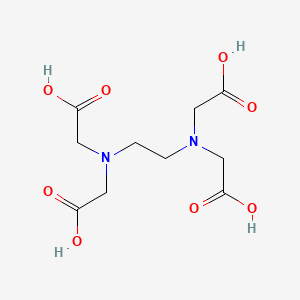
CAS · 60-00-4
Product Overview
Edetic acid is a high-purity pharmaceutical-intermediates supplied for industrial and specialty chemical applications. Contact our team for specifications, packaging options and lead times.
Product Specifications
| Item | Specification |
|---|---|
| Appearance | White crystalline powder |
| Assay | 99.0% min |
| Chloride | 0.01% max |
| Sulfate | 0.05% max |
| Fe | 0.001% max |
| Pb | 0.001% max |
| Chelating value | 339 mg CaCO₃/g min |
| pH (50g/L, 25 °C) solution | 2.8 to 3.0 |
| Dry weight loss (103–107 °C) | 0.2% max |
Applications
1. Industrial and Technical Uses
a. Water Treatment
● Edetic acid丨CAS 60-00-4 is used to soften water by binding calcium and magnesium ions.
● Prevents scaling in boilers, pipelines, and cooling systems.
b. Cleaning Products
● Included in detergents and soaps to prevent mineral build-up and improve cleaning efficiency in hard water.
c. Pulp and Paper Industry
● Helps prevent deposition of scale and resin during paper processing.
● Enhances the effectiveness of bleaching agents.
d. Textile and Dyeing
● Acts as a sequestering agent to remove unwanted metal ions that could interfere with dyes and fabric treatment.
2. Pharmaceuticals and Medicine
a. Chelation Therapy
● Used in treating heavy metal poisoning (e.g., lead, mercury).
● EDTA binds toxic metals, which are then excreted through urine.
b. Anticoagulant in Blood Collection
● EDTA is used in blood sample tubes to prevent clotting by binding calcium.
c. Dental Products
● Found in root canal irrigants to remove smear layers and bind calcium in dentin.
d. Eye Drops and Otic Solutions
● Stabilizes formulations and removes metal ions that may catalyze oxidation.
3. Cosmetics and Personal Care
EDTA is widely used in formulations to enhance stability and improve performance:
● Shampoos, conditioners, and soaps: Prevents metal ion-induced discoloration and degradation.
● Creams and lotions: Enhances product shelf life.
● Toothpaste: Improves effectiveness and reduces sensitivity in some formulations.
4. Food and Beverage Industry
a. Preservative and Antioxidant
● EDTA is used to preserve color, flavor, and texture by binding metal ions that catalyze oxidation.
● Common in mayonnaise, salad dressings, canned vegetables, and soft drinks.
b. Regulatory Status
● Approved as a food additive under specific concentrations (e.g., calcium disodium EDTA – E385).
5. Analytical Chemistry
Edetic acid丨CAS 60-00-4 plays a critical role in complexometric titrations:
● Used to determine the concentration of metal ions in solutions (e.g., Ca²⁺, Mg²⁺).
● Important in water hardness analysis, biochemical assays, and laboratory buffers.
Benefits
√ Powerful Chelating Agent
● Forms stable complexes with most metal ions, preventing unwanted chemical reactions in various settings.
√ Wide Range of Soluble Salts
● EDTA is available in acid form and as disodium, tetrasodium, and calcium disodium salts, allowing for flexibility across pH ranges and solubility needs.
√ Stabilizer in Formulations
● Prevents degradation of cosmetics, pharmaceuticals, and industrial products by removing catalytic metal ions.
√ Non-toxic in Proper Use
● While large quantities can be toxic, EDTA is considered safe at regulated doses in food, cosmetics, and medical applications.
√ Environmentally Useful
● In remediation, EDTA is used to extract heavy metals from contaminated soil and water, aiding in environmental cleanup.
Conclusion
Edetic acid丨CAS 60-00-4 is an essential, multi-functional compound valued across a broad range of industries for its metal-chelating ability. From water purification and industrial cleaning to medicine, cosmetics, and food preservation, EDTA improves stability, efficiency, and safety by preventing metal-induced issues.
Previous
8-Hydroxy-5-quinolinesulfonic Acid Monohydrate丨CAS 283158-18-9
Next
Conclusion
A concise summary and suitability assessment for this product is available on request. Contact our team to discuss whether it fits your process and quality requirements.