
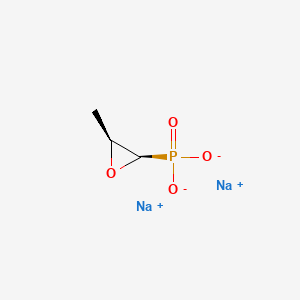
CAS · 26016-99-9
Product Overview
Disodium phosphonomycin丨26016-99-9, also known as Phosphonomycin disodium salt, is a phosphonic acid derivative primarily used in pharmaceutical applications due to its antibacterial properties. It is an antibiotic compound with a structure that includes a phosphonic acid group, which imparts significant biological activity, particularly against Gram-positive and Gram-negative bacteria.
Product Specifications
| Property | Specification |
|---|---|
| Grade | EP7.0 |
| Appearance | White or almost white crystal powder |
| Assay | 95.0% to 101.0% |
| Identification | Positive |
| Appearance of Solution | Clear and not more intensely colored than reference solution B9 |
| pH | 9.0 to 10.5 |
| Water | 1.0% max |
| Specific Optical Rotation | -13.0° to -15.0° |
| Heavy Metals | 20 ppm max |
| Disodium 1,2-(Dihydroxypropyl)-Phosphone | 1.0% max |
| Bacterial Endotoxins | 0.083 IU/mg max |
Applications
1. Antibiotic and Antibacterial Treatment
● Broad-Spectrum Antibacterial Agent:
Used as a therapeutic agent in the treatment of urinary tract infections (UTIs) and respiratory infections caused by susceptible bacteria.
● Treatment for Resistant Infections:
Effective against certain drug-resistant bacteria, particularly those that are resistant to beta-lactam antibiotics.
● Inhibition of Bacterial Cell Wall Synthesis:
Phosphonomycin acts by inhibiting bacterial cell wall synthesis, disrupting bacterial growth and replication.
2. Pharmaceutical and Drug Development
● Precursor for the Synthesis of Other Antibiotics:
Used in the synthesis of other antibacterial agents and can be modified for developing new antibiotics.
● Experimental Research in Antibiotic Resistance:
Studied for its potential use in combating bacterial resistance and for developing novel antibiotic therapies.
3. Agriculture
● Fungicide and Bactericide:
Used in agriculture to prevent bacterial and fungal infections in plants, especially in controlling bacterial blight and other plant diseases.
4. Research and Diagnostic Applications
● Laboratory Research:
Used in microbiological research to study the mechanism of bacterial resistance and the development of new antibacterial strategies.
Benefits
1. Broad Antibacterial Activity
● Exhibits effective action against a wide range of bacterial infections, including both Gram-positive and Gram-negative organisms.
2. Mechanism of Action
● Its phosphonic acid structure helps inhibit the synthesis of bacterial cell walls, making it a potent antibiotic for several types of resistant bacteria.
3. Low Toxicity
● It has a relatively low toxicity profile compared to some other antibiotics, making it a safer treatment option for certain infections.
4. Potential for Treating Resistant Infections
● Effective against certain antibiotic-resistant strains, making it a useful agent in the fight against multidrug-resistant bacterial strains.
5. Versatile Applications
● Beyond human medicine, it is also utilized in agriculture and research, providing additional value across different sectors.
Conclusion
Disodium phosphonomycin丨26016-99-9 is a powerful and versatile antibacterial agent with applications in pharmaceuticals, agriculture, and scientific research. Its broad-spectrum antibacterial activity, effectiveness against resistant infections, and low toxicity make it a valuable compound in the ongoing fight against bacterial diseases and in the development of new therapeutic strategies.
Previous
Ursodeoxycholic Acid丨CAS 128-13-2
Next