
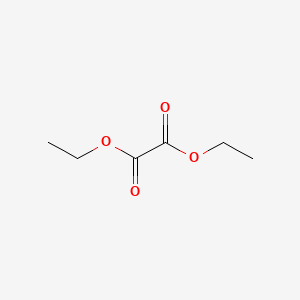
CAS · 95-92-1
Product Overview
Diethyl oxalate is a high-purity analytical-reagents supplied for industrial and specialty chemical applications. Contact our team for specifications, packaging options and lead times.
Product Specifications
| Grade: | AR |
|---|---|
| Appearance: | Colorless liquid |
| Purity(GC): | 99% to 100% |
| Acetic acid (as oxalic acid): | 0.01% max. |
| Refractive index n20/D: | 1.409 to 1.411 |
| Density (20℃): | 1.079 to 1.082 |
| Infrared spectrum: | Conforms to Structure |
Applications
1. Intermediate in Organic Synthesis
Widely used as a building block for pharmaceuticals, agrochemicals, and fine chemicals.
Precursor in the synthesis of barbiturates, including phenobarbital.
2. Polymer Industry
Utilized in producing specialty polymers and plasticizers.
Involved in polyester synthesis and modification.
3. Dyestuff and Pigment Manufacturing
Used as a raw material in the preparation of azo dyes and metal complex dyes.
4. Perfume and Flavor Industry
Occasionally used in the synthesis of fragrance esters and aroma compounds due to its ester functional groups.
5. Metal Complexation Agent
Employed in metal extraction and separation processes, forming stable oxalate complexes with certain metals.
6. Laboratory Reagent
Used as a reagent in organic chemistry for esterification, alkylation, and condensation reactions.
Benefits
Reactivity: The diester structure allows it to participate in numerous organic transformations.
Versatility: Applicable across multiple industries - pharmaceutical, dye, polymer, and chemical manufacturing.
Ease of Handling: Liquid form facilitates transport, storage, and integration into reaction systems.
Cost-effective: Generally affordable and available in bulk for industrial applications.
Low Toxicity (Compared to Other Oxalates): Less hazardous than oxalic acid in handling and processing.
Conclusion
Diethyl oxalate (CAS 95-92-1) is a highly versatile chemical intermediate that plays a key role in the synthesis of a wide range of valuable compounds - from barbiturates and dyes to polymers and esters. Its chemical structure makes it ideal for use in both industrial and laboratory settings. With its cost-effectiveness and broad reactivity, diethyl oxalate remains a valuable component in modern chemical manufacturing and research.
Previous
Next