CAS · 7173-51-5
Product Overview
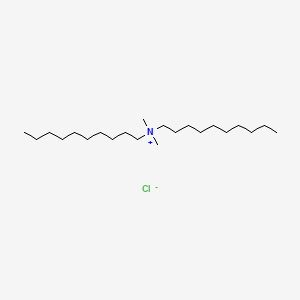
Didecyl dimethyl ammonium chloride丨CAS 7173-51-5, is a quaternary ammonium compound (QAC) used primarily as a biocidal agent. It appears as a colorless to pale yellow liquid and possesses strong antimicrobial properties, making it effective against bacteria, fungi, and viruses. DDAC is widely employed in disinfection, sanitization, preservation, and surface treatments, particularly in settings where hygiene and microbial control are critical.
Its chemical structure includes two decyl (C10) groups and a quaternary nitrogen center, which enhances its surface activity and antimicrobial efficiency.
Product Specifications
| Property | Specification |
|---|---|
| Appearance | Colourless to light yellow clear liquid |
| Active Content | 78% - 82% |
| pH of 10% solution | 5 - 9 |
| Free amine (w/w) | 2.0% max |
| Color (APHA) | 150 max |
Applications
1. Disinfectants and Sanitizers
Didecyl dimethyl ammonium chloride丨CAS 7173-51-5 is a broad-spectrum disinfectant, extensively used in:
● Healthcare Facilities: For disinfecting hospital surfaces, instruments, and patient-care areas.
● Food Processing Plants: Used in cleaning-in-place (CIP) systems, food-contact surface sanitization, and conveyor belt disinfection.
● Public and Commercial Spaces: Found in disinfectant sprays and wipes for schools, gyms, offices, and public transport systems.
It is especially valuable during outbreaks of communicable diseases for high-level disinfection and infection control.
2. Water Treatment
Used to control microbial growth in:
● Cooling towers
● Industrial water systems
● Swimming pools and spas
DDAC helps manage biofilms and prevents microbial fouling of pipes and equipment.
3. Wood Preservation
In the timber and wood protection industry, DDAC is combined with other fungicides to protect against:
● Mold and fungal growth
● Insect infestation
● Rot and decay
This prolongs the life of wood products used outdoors or in damp environments.
4. Agriculture and Horticulture
Used to disinfect:
● Greenhouses
● Tools and equipment
● Surfaces in animal husbandry facilities
It helps prevent the spread of plant pathogens and livestock diseases.
5. Personal Care and Hygiene Products
Though limited due to regulatory constraints, DDAC may be used in:
● Antiseptic hand wipes
● Surface sprays
● Mouthwash (at very low concentrations and under strict guidelines)
It is more common in surface disinfection rather than direct skin applications due to its potential irritancy.
6. Textile and Leather Industry
Used as a microbial preservative and odor control agent in:
● Upholstery fabrics
● Footwear linings
● Leather treatment
This helps maintain freshness and prolongs shelf life by preventing bacterial and fungal growth.
Benefits
1. Antimicrobial Activity
● Effective against Gram-positive and Gram-negative bacteria, fungi, algae, and viruses.
● DDAC disrupts the cell membrane of microbes, leading to cell death.
2. Residual Efficacy
● Offers long-lasting protection on surfaces after application.
● Reduces the frequency of reapplication in certain environments.
3. Non-corrosive and Surface Friendly
● Safe for use on metal, plastic, glass, wood, and ceramic surfaces.
● Unlike bleach or strong acids, it is non-corrosive and non-staining when used as directed.
4. Low Odor and Non-Flammable
● Pleasant handling characteristics compared to chlorine-based disinfectants.
● Suitable for indoor use due to low odor profile and non-flammability.
5. Effective at Low Concentrations
● Demonstrates high efficacy at low parts-per-million (ppm) levels.
● Economical for large-scale disinfection in industrial or institutional settings.
6. Compatibility with Formulations
● DDAC blends well with alcohols, detergents, and chelating agents.
● Used in ready-to-use sprays, wipes, concentrates, and fogging formulations.
Conclusion
Didecyl dimethyl ammonium chloride丨CAS 7173-51-5 is a highly effective biocide with diverse applications across healthcare, agriculture, industrial hygiene, and water treatment sectors. Its broad-spectrum antimicrobial activity, residual efficacy, and surface compatibility make it indispensable in modern disinfection and sanitation practices. With increasing global emphasis on hygiene, particularly in healthcare and food processing, DDAC continues to play a critical role in infection control and product preservation.
Previous
N-Vinyl-2-pyrrolidone丨CAS 88-12-0
Next