
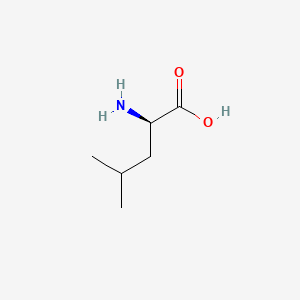
CAS · 328-38-1
Product Overview
D-Leucine is a high-purity amino-acid supplied for industrial and specialty chemical applications. Contact our team for specifications, packaging options and lead times.
Product Specifications
| Item | Specification |
|---|---|
| Appearance | White crystal powder |
| Assay | 98.0% to 101.0% |
| Identification | HPLC retention time corresponds to WRS under assay item |
| Isomer Purity | Max 0.5% |
| Specific Rotation | +14.0° to +16.0° (C=4, 6N HCl) |
| Residue on Ignition | Max 0.4% |
| Loss on Drying | Max 0.5% |
| Non-Animal Origin | Conforms |
Applications
1. Pharmaceutical and Drug Formulations
a. Excipient in Inhalation Therapies
● D-Leucine丨CAS 328-38-1 is increasingly used as an aerosol dispersibility enhancer in dry powder inhalers (DPIs).
● It improves:
Flowability
Particle dispersibility
Stability of active pharmaceutical ingredients (APIs)
● Commonly co-spray-dried with APIs to enhance lung deposition of drugs for respiratory diseases like asthma and COPD.
b. Chiral Intermediate in Drug Synthesis
● D-Leucine丨CAS 328-38-1 serves as a chiral building block for the synthesis of stereochemically pure pharmaceuticals.
● It is used in:
Peptide synthesis
Antibiotic development
Non-proteinogenic amino acid derivatives
● Its chirality allows for stereoselective reactions, critical in the development of optically pure drugs.
2. Nutritional and Clinical Research
Though not commonly used in nutritional supplements, D-leucine is of growing interest in metabolism research, particularly in:
● Studying amino acid racemization and its roles in aging and disease
● Investigating the transport and metabolism of D-amino acids in the brain and other tissues
● Understanding D-amino acid oxidase activity, which plays a role in neurotransmitter regulation
In some cases, D-Leucine has been explored for:
● Neuroprotective effects
● Modulation of neurotransmission
3. Biotechnology and Peptide Design
● Used in the synthesis of peptides and peptidomimetics where resistance to enzymatic degradation is required.
● Incorporation of D-amino acids, including D-Leucine, into peptides can:
Increase stability against proteases
Alter bioactivity and receptor selectivity
Enhance half-life and therapeutic efficacy
This application is particularly relevant in:
● Antimicrobial peptides
● Cancer-targeted peptides
● Hormone analogs
4. Analytical and Biochemical Research
● D-Leucine is used as a standard or reference compound in chiral chromatography, stereoselectivity studies, and enzymatic activity assays.
● Important in studying racemase enzymes that convert L- to D-amino acids and vice versa.
● Plays a role in the analysis of D-amino acid content in food, biological tissues, and pharmaceuticals.
Benefits
1. Enhances Pulmonary Drug Delivery
● D-Leucine's ability to form crystalline, low-density particles improves the aerodynamic properties of inhaled powders.
● It acts as a dispersion enhancer, helping particles avoid aggregation and reach deeper regions of the lungs.
● Offers a safe, biocompatible excipient for targeted pulmonary therapies.
2. Stability and Resistance in Peptides
● Substituting L- with D-leucine in peptides extends their lifespan in biological environments by increasing protease resistance.
● This is crucial for the development of long-acting therapeutic peptides, especially those targeting inflammatory or infectious diseases.
3. Stereoselective Utility
● D-Leucine丨CAS 328-38-1 allows for the synthesis of chiral drugs with improved selectivity, reduced side effects, and enhanced potency.
● Its use as a chiral auxiliary or synthesis intermediate supports the production of high-value pharmaceuticals and diagnostic agents.
4. Research Tool in Neurology and Aging
● D-amino acids like D-Leucine are found in trace amounts in human tissues and are involved in neuromodulation.
● Abnormal levels of D-Leucine and other D-amino acids have been linked to neurological disorders and age-related changes, making it a valuable biomarker and research compound.
Conclusion
D-Leucine丨CAS 328-38-1 is a specialized amino acid with growing relevance in pharmaceutical technology, peptide drug development, inhalation therapies, and biomedical research. Its unique stereochemistry offers benefits that go beyond its nutritional counterpart (L-Leucine), making it valuable in:
● Enhancing drug delivery systems
● Improving bioactive peptide stability
● Supporting chiral synthesis of complex molecules
● Expanding our understanding of D-amino acid biology
Previous
Arginine Oxoglurate丨CAS 16856-18-1
Next
Conclusion
A concise summary and suitability assessment for this product is available on request. Contact our team to discuss whether it fits your process and quality requirements.