
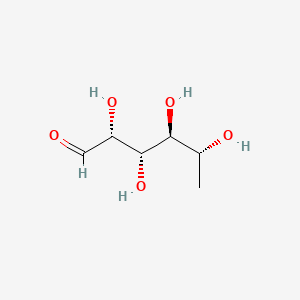
CAS · 3615-37-0
Product Overview
D-(+)-Fucose is a high-purity sugar-units supplied for industrial and specialty chemical applications. Contact our team for specifications, packaging options and lead times.
Product Specifications
| Appearance: | White or off-white solid |
|---|---|
| Purity by TLC: | 98% min |
| Purity (HPLC): | 97% min |
| Solubility: | Readily soluble in water and insoluble in ether |
| NMR and MS: | Should comply |
| Identification: | IR and TLC |
| Specific rotation: | +74° to +77° |
Applications
1. Pharmaceutical Research and Development
Precursor in Glycodrug Synthesis
D-(+)-Fucose is used in the synthesis of fucosylated oligosaccharides, which play critical roles in biological recognition processes. It is a valuable building block for drug design, especially for glycomimetic drugs that mimic the action of natural glycan structures.
Study of Stereospecific Drug Interactions
Its unique stereochemistry makes D-(+)-fucose a useful probe in exploring chiral recognition and stereoselective binding in pharmaceutical compounds.
Glycoengineering
It contributes to glycoprotein engineering, aiding the design of antibodies, vaccines, or other therapeutics with customized glycan patterns.
2. Biochemical and Enzymatic Research
Substrate for Enzyme Specificity Studies
D-(+)-Fucose is used to investigate enzyme specificity, particularly in dehydrogenases, epimerases, and glycosyltransferases, which help elucidate the role of sugar stereochemistry in metabolic pathways.
Model Compound in Rare Sugar Biochemistry
As a mirror image of naturally abundant L-fucose, D-(+)-fucose helps researchers understand the biological significance of chirality in metabolism and recognition processes.
3. Chemical Synthesis and Material Science
Chiral Building Block
Due to its asymmetric centers, D-(+)-Fucose serves as a chiral synthon in organic synthesis for the construction of complex natural products, glycosides, or ligands for chiral catalysts.
Intermediate in Rare Sugar Production
It can act as an intermediate or reference compound in the production or conversion of other rare sugars through biocatalytic processes.
4. Medical and Diagnostic Tools
Sugar Probes in Glycobiology
D-(+)-Fucose can be incorporated into fluorescent or radiolabeled sugar probes for use in studying carbohydrate-mediated interactions on cell surfaces, such as pathogen-host binding, immune signaling, or cell-cell recognition.
Benefits
✅ Chirally Unique Structure
Offers a stereochemically distinct version of fucose.
Useful in developing stereospecific synthetic routes and studying enantiomeric effects in biology.
✅ Valuable Research Tool
Provides a reference for distinguishing L- vs. D-fucose behavior in metabolic or structural studies.
Enables the design of molecules with selective biological activity.
✅ Potential for Therapeutic Development
Plays a role in the development of glycomimetics, antibodies, or vaccines with modified glycan chains that may influence pharmacokinetics and immunogenicity.
✅ Enzyme and Metabolic Pathway Elucidation
Ideal for mapping the activity and specificity of glycosylation enzymes or rare sugar biosynthetic pathways.
✅ Glycoengineering Applications
Facilitates modification of glycoproteins and cell surface glycans for enhanced therapeutic properties, such as reduced immunogenicity or improved targeting.
Conclusion
D-(+)-Fucose (CAS 3615-37-0) is a rare and stereochemically unique sugar with increasing importance in glycoscience, pharmaceutical synthesis, and biochemical research. While not as naturally widespread as its enantiomer L-fucose, its distinct structure makes it a powerful tool for chiral synthesis, glycoengineering, and enzyme specificity studies. Its role in the development of next-generation therapeutics and diagnostic tools continues to expand as the importance of glycan-based biology becomes more recognized.
Previous
N-Acetylgalactosamine丨CAS 1811-31-0
Next