
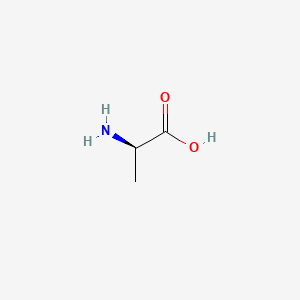
CAS · 338-69-2
Product Overview
D-Alanine is a high-purity pharmaceutical-intermediates supplied for industrial and specialty chemical applications. Contact our team for specifications, packaging options and lead times.
Product Specifications
| Grade | AJI92 |
|---|---|
| Appearance | White crystals or crystalline powder |
| Specific Rotation [α]D²⁰ | -14.3° ~ -15.3° |
| State of Solution | 95.0% min |
| Chloride (Cl) | 0.1% max |
| Heavy Metals (Pb) | 10 ppm max |
| Arsenic (As₂O₃) | 2 ppm max |
| Loss on Drying | 0.2% max |
| Residue on Ignition | 0.2% max |
| Assay | 98.0% ~ 101.0% |
Applications
D-Alanine (CAS 338-69-2) is a naturally occurring D-enantiomer of the amino acid alanine, widely applied in biochemical, pharmaceutical, and industrial fields. In microbiology, it plays a crucial role as a component of bacterial cell wall peptidoglycan, making it a key compound for studying bacterial growth, antibiotic mechanisms, and resistance. In pharmaceuticals, D-alanine is used as a chiral building block for synthesizing APIs and peptide-based drugs, as well as in designing enzyme inhibitors and antimicrobial agents. It is also employed in biotechnology as a nutrient in microbial culture media and as a starting material in the synthesis of optically active compounds. Beyond biomedicine, D-alanine is used in food and feed additives, biochemical assays, and fine chemical production.
Benefits
The benefits of D-alanine are rooted in its chirality, biological relevance, and versatility. As a D-amino acid, it provides stereochemical diversity for peptide and small-molecule drug synthesis, which can improve metabolic stability, receptor selectivity, and pharmacological activity compared to L-amino acid analogs. Its incorporation into peptides can increase resistance to enzymatic degradation, enhancing drug efficacy and bioavailability. In microbiology, its role in bacterial cell wall synthesis makes it valuable in antibiotic mechanism studies, particularly for beta-lactam and glycopeptide antibiotics. Its ease of handling, stability, and compatibility with synthetic and biological systems further enhance its usefulness in both research and industrial applications.
Conclusion
In summary, D-alanine is a multifunctional compound applied in pharmaceuticals, biotechnology, microbiology, and fine chemical synthesis. Its applications include serving as a chiral building block, a nutrient in microbial media, and a tool for antibiotic research, while its benefits lie in its chirality, biological importance, and capacity to enhance drug stability and selectivity. With these properties, D-alanine remains an essential amino acid derivative for research, industrial, and medical purposes.
Previous
3-Bromo-5-(tert-butyl)benzobthiophene丨CAS 1780644-81-6
Next