
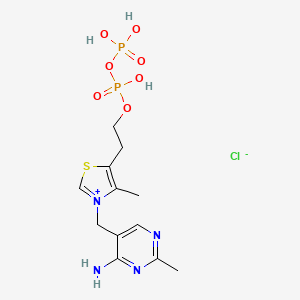
CAS · 154-87-0
Product Overview
Cocarboxylase is a high-purity pharmaceutical-excipients supplied for industrial and specialty chemical applications. Contact our team for specifications, packaging options and lead times.
Product Specifications
| Appearance: | White crystalline powder |
|---|---|
| Assay (HPLC, on dry base): | 93% min |
| Identity: | |
| IR: | Conforms |
| Cl: | Conforms |
| pH (10% in water): | 1.0 to 1.4 |
| Loss on drying (at 105°C): | 1.5% max |
| Chloride (on dry base): | 7.5–7.9% |
| Free phosphate (PO₄): | 1.0% max |
| Cadmium (ICP-MS): | 0.8 ppm max |
| Lead (ICP-MS): | 1 ppm max |
| Mercury (ICP-MS): | 0.3 ppm max |
| Arsenic (ICP-MS): | 2 ppm max |
| Thiamine monophosphoric acid ester chloride (HPLC): | 4.0% max |
| Thiamine hydrochloride (HPLC): | 0.5% max |
| Other related substances (HPLC): | 1.5% max |
| Residual solvents (Ethanol, GC): | 0.5% max |
| Total Plate Count: | 1000 CFU/g max |
| Yeasts and Molds: | 100 CFU/g max |
| E. coli (in 10g): | Not detectable |
| Staphylococcus aureus (in 1g): | Not detectable |
| Salmonella (in 1g): | Not detectable |
Applications
1. Pharmaceutical and Medical Use
● Used therapeutically as a coenzyme drug in:
Treatment of vitamin B1 deficiency
Neurological disorders (e.g., polyneuritis, Korsakoff's syndrome)
Cardiac dysfunctions such as heart failure or myocarditis associated with B1 deficiency
● Administered via injection or intravenous drip in clinical settings to enhance metabolic function and energy production
2. Nutritional and Dietary Supplements
● Occasionally included in nutritional supplements and parenteral nutrition formulations to support:
Glucose metabolism
Nervous system health
Muscle function
3. Biochemical and Metabolic Research
● Used in biochemical research as a key cofactor to study:
Enzymatic activity of pyruvate decarboxylase, α-ketoglutarate dehydrogenase, and transketolase
Energy metabolism pathways (glycolysis, TCA cycle, pentose phosphate pathway)
4. Cell Culture and Biotechnology
● Included in cell culture media and enzyme assays as a required coenzyme for thiamine-dependent enzymes
● Enhances metabolic functions in microbial fermentation and biocatalysis applications
Benefits
1. Essential Coenzyme for Energy Metabolism
● Facilitates the decarboxylation of α-keto acids and transketolation reactions vital for energy production in cells
● Supports proper function of mitochondria, helping prevent lactic acidosis in B1-deficient individuals
2. Neuroprotective Effects
● Plays a key role in nerve impulse transmission and neurotransmitter synthesis
● Used in treatment protocols for alcoholic neuropathy and Wernicke's encephalopathy
3. Improved Bioavailability over Thiamine
● Cocarboxylase acts directly as the active form, bypassing the body's conversion process required for thiamine
● Useful in acute or critical care settings where rapid metabolic activation is needed
4. Support in Metabolic Disorders
● Beneficial for individuals with inborn errors of metabolism or enzyme deficiencies affecting thiamine-dependent processes
● Helps stabilize energy metabolism in patients with diabetes, sepsis, or critical illness
Conclusion
Cocarboxylase丨CAS 154-87-0, the active coenzyme form of vitamin B1, is vital for carbohydrate metabolism, neurological function, and cellular energy production. It is widely used in clinical medicine, biochemical research, and biotechnology for its ability to support and enhance enzymatic processes. Its rapid onset and broad metabolic role make it a key component in treating B1 deficiency-related disorders and supporting overall metabolic health.
Previous
Next