
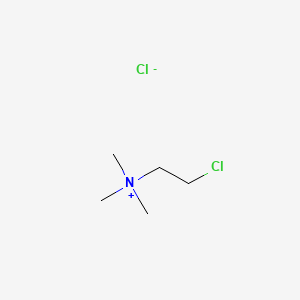
CAS · 999-81-5
Product Overview
Chlormequat chloride丨CAS 999-81-5, is a quaternary ammonium compound used as a plant growth regulator (PGR). It functions primarily as a growth retardant by inhibiting gibberellin biosynthesis, thereby reducing cell elongation. This leads to shorter, sturdier plants with improved resistance to lodging and better resource allocation to reproductive parts. Chlormequat chloride is widely used in cereal crops, ornamentals, vegetables, and greenhouse plants for height control, yield improvement, and quality enhancement.
Product Specifications
| Appearance | White to light yellow crystal |
|---|---|
| Content | 98.0% min |
| pH | 3.5 to 7.5 |
| NC | 0.3% max |
| Water | 1.5% max |
Applications
A. Height Control and Lodging Prevention
● In grain crops like wheat, barley, and oats, chlormequat chloride reduces stem elongation, producing shorter plants that are less likely to lodge (fall over) due to wind, rain, or heavy grain heads.
● In ornamentals and potted plants (e.g., chrysanthemum, geranium, petunia), it is used to maintain compact and marketable plant forms, especially in commercial nurseries and floriculture.
B. Yield and Productivity Enhancement
● By reducing vegetative growth, the plant allocates more energy to flowering and fruit set, which often results in increased yields and better crop uniformity.
● In cereals, this redirection of energy can enhance grain filling and improve harvest index.
C. Improved Transplanting and Handling
● Treated seedlings are shorter and sturdier, making them easier to transport and transplant.
● Used in nurseries for vegetables like tomatoes, peppers, and cabbage to improve transplant success and early establishment in the field.
D. Promoting Early Flowering
● In certain crops and ornamentals, chlormequat chloride can stimulate earlier or more synchronized flowering, supporting more predictable production schedules and improved flowering uniformity.
E. Controlled Growth in Greenhouse Crops
● In greenhouses, it is widely used for non-toxic, manageable height control of plants where mechanical pruning is impractical.
● Helps ensure uniform canopy development and reduces shading within densely planted crops.
Benefits
A. Effective Lodging Control
● Lodging causes yield loss, disease susceptibility, and harvest difficulties in cereals.
● Chlormequat chloride enhances stem strength and reduces plant height, thereby minimizing lodging risks.
B. Enhances Crop Yield and Quality
● Promotes a favorable balance between vegetative and reproductive growth.
● Improves fruit set, flower formation, and grain filling, contributing to higher and more uniform yields.
C. Compatible with a Wide Range of Crops
● Versatile across cereals, ornamentals, vegetables, and fruit crops.
● Easily integrated into conventional and intensive crop management systems.
D. Low Toxicity and Biodegradable
● Has low mammalian toxicity and degrades relatively quickly in the environment.
● Safe to use in greenhouses and open fields, provided application rates and intervals are followed.
E. Cost-Effective and Easy to Apply
● Available in liquid formulations, it is easy to apply via foliar spray or soil drench.
● Cost-effective for large-scale cereal production as well as high-value horticultural crops.
Conclusion
Chlormequat chloride丨CAS 999-81-5 is a powerful and widely used plant growth regulator that effectively controls excessive vegetative growth, improves crop architecture, and enhances yield potential. It offers numerous benefits across cereal production, floriculture, horticulture, and nursery management, including lodging prevention, improved transplant handling, and better flower and fruit development. With responsible use, proper dosage, and adherence to regulations, it remains an indispensable tool in modern and sustainable crop production systems.
Previous
N-(2-Ethylhexyl)-5-norbornene-2,3-dicarboximide丨CAS 113-48-4
Next