
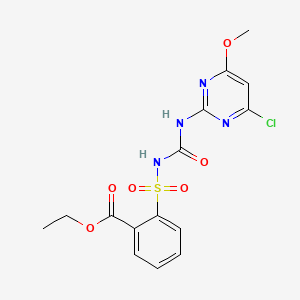
CAS · 90982-32-4
Product Overview
Chlorimuron-ethyl is a high-purity herbicides supplied for industrial and specialty chemical applications. Contact our team for specifications, packaging options and lead times.
Product Specifications
| Appearance | White to light yellow uniform powder |
|---|---|
| Active ingredient | 95.0% min. |
| Loss on drying | 0.5% max. |
| Dimethylformamide solution | 0.5% max. |
| PH | 2.0 to 6.0 |
Applications
Chlorimuron-ethyl (CAS 90982-32-4) is a selective systemic herbicide belonging to the sulfonylurea family, widely applied in modern agriculture for weed management. Its primary application is in the control of a broad spectrum of annual and perennial broadleaf weeds and certain grasses that compete with crops for nutrients, sunlight, and water. It is particularly effective in soybean cultivation but can also be used in other crops such as peanuts, maize, and cereals when used under appropriate guidelines. The herbicide works by inhibiting the acetolactate synthase (ALS) enzyme, which is vital for amino acid synthesis in plants, leading to growth inhibition and eventual weed death. Due to its high efficacy at very low application rates, Chlorimuron-ethyl is favored in integrated weed management programs, often combined with other herbicides to broaden the spectrum of control and delay resistance development. Its flexibility in pre-emergence and post-emergence applications enhances its role as a practical tool for farmers aiming to maintain crop yields and field cleanliness.
Benefits
The benefits of Chlorimuron-ethyl extend beyond its core herbicidal activity. Its high potency at low doses minimizes the chemical load introduced into the environment compared to many conventional herbicides, contributing to cost efficiency and reduced environmental impact. This characteristic lowers storage, handling, and transportation costs while maintaining effective weed control. Its long-lasting residual activity ensures extended protection throughout the crop cycle, reducing the need for frequent reapplications and thus saving labor and input costs for farmers. Additionally, by controlling a wide variety of competitive weeds, it helps crops achieve higher productivity and better quality, directly translating into improved profitability. Chlorimuron-ethyl also plays a role in sustainable farming practices, as it supports reduced tillage systems that conserve soil structure and moisture, decreasing erosion and promoting long-term soil health.
Conclusion
In conclusion, Chlorimuron-ethyl represents a powerful and efficient tool for modern weed management in agriculture. Its targeted action, high efficacy at low doses, and compatibility with integrated weed control strategies make it a valuable herbicide for maintaining crop yields and profitability. By reducing labor costs, chemical usage, and environmental burdens, while promoting sustainable agricultural practices, Chlorimuron-ethyl contributes significantly to both economic and ecological goals in crop production. Its continued use, coupled with responsible management strategies to prevent resistance, ensures that it remains a cornerstone in effective and sustainable weed control.
Previous
Next