
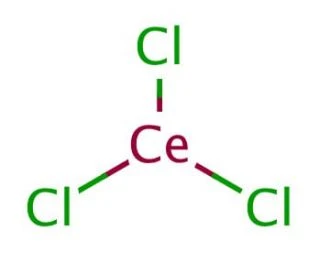
CAS · 7790-86-5
Product Overview
Cerium Chloride 丨CAS 7790-86-5 is an inorganic compound consisting of cerium, a rare earth element, combined with chlorine. Known for its versatility and unique chemical properties, this compound is widely utilized across multiple industries and scientific fields. Its ability to transition between oxidation states (Ce³⁺ and Ce⁴⁺) enhances its effectiveness in numerous applications, ranging from catalysis to material science.
Product Specifications
| Property | Specification |
|---|---|
| Appearance | White crystal |
| CeO2/TREO | 99.99% min |
| TREO | 69.60% min |
| La2O3 | 0.001% max |
| Y2O3 | 0.001% max |
| Pr6O11 | 0.001% max |
| Nd2O3 | 0.001% max |
| Sm2O3 | 0.001% max |
| Fe2O3 | 0.001% max |
| NiO | 0.001% max |
| SiO2 | 0.005% max |
| CaO | 0.0025% max |
| PbO | 0.002% max |
| H2O | 0.5% max |
Applications
1.Catalysis:
- Organic Synthesis: Cerium chloride serves as a catalyst in various organic reactions, including carbon-carbon bond formations and oxidative transformations, facilitating efficient and selective processes under mild conditions.
- Polymer Industry: In polymerization, it plays a role in creating specialty polymers with enhanced properties.
2.Nanoparticle Production:
- Cerium chloride is a precursor for synthesizing cerium oxide nanoparticles, which are valued for their high surface area, UV absorption, and catalytic activity, making them indispensable in applications like energy storage, environmental cleanup, and biomedical research.
3.Glass and Ceramics:
- Glass Additive: Used in glass manufacturing, cerium chloride丨CAS 7790-86-5 improves UV absorption and optical properties, contributing to the development of specialty glass products.
- Ceramics Manufacturing: It acts as a dopant in ceramic materials, enhancing their mechanical and thermal properties.
4.Environmental Applications:
- Pollution Control: As a precursor to cerium oxide, cerium chloride contributes to the development of catalysts that reduce harmful emissions in automotive exhaust systems and decompose pollutants in industrial processes.
- Water Treatment: It plays a role in removing contaminants from water, either directly or through its conversion to cerium oxide.
5.Protective Coatings:
- Cerium chloride is used to formulate corrosion-resistant coatings for metals, extending their lifespan and reducing maintenance in harsh environments.
6.Reagent in Analytical Chemistry:
- Its ability to participate in redox reactions makes cerium chloride a valuable reagent for quantitative analysis and research experiments.
Benefits
1.Enhanced Reactivity:
- The redox flexibility of cerium chloride enables efficient catalytic activity, improving reaction rates and selectivity.
2.Environmental Protection:
- When used as a precursor for cerium oxide, it helps mitigate pollution and contributes to cleaner environmental technologies.
3.Material Innovation:
- Its role in the synthesis of nanoparticles and advanced materials fosters innovation in nanotechnology, energy solutions, and biomedical applications.
4.Corrosion Resistance:
- Cerium chloride-based coatings provide durable protection against corrosion, particularly for aluminum and steel structures.
Conclusion
A concise summary and suitability assessment for this product is available on request. Contact our team to discuss whether it fits your process and quality requirements.