
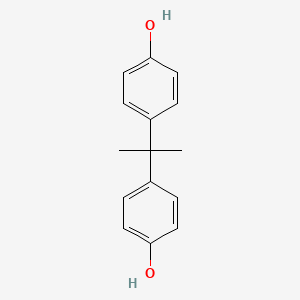
CAS · 80-05-7
Product Overview
Bisphenol A is a high-purity resins supplied for industrial and specialty chemical applications. Contact our team for specifications, packaging options and lead times.
Product Specifications
| Appearance | White flakes or particles |
|---|---|
| Purity | 99.6% min |
| Ethanol solubility chromaticity | 25 APHA max |
| Freezing point | 156.5 °C min |
| Free phenol | 300 ppm max |
| 2,4-isomer | 1000 ppm max |
| Water | 2000 ppm max |
| Fe | 1 ppm max |
| Ash content | 10 ppm max |
Applications
Bisphenol A (BPA) is a foundational compound in the production of a wide range of high-performance polymers and industrial materials. It is primarily used to manufacture polycarbonate plastics, which are valued for their transparency, high impact resistance, and thermal stability, making them suitable for applications such as optical media (CDs, DVDs, Blu-ray discs), eyewear lenses, electronic housings, automotive components, and medical devices. BPA is also a critical intermediate in the synthesis of epoxy resins, which serve as protective coatings for food and beverage cans, industrial flooring, adhesives, sealants, and corrosion-resistant coatings for metals and concrete. Beyond polycarbonates and epoxies, BPA is employed in the production of flame retardants, vinyl ester resins, and specialty polymers with tailored mechanical, thermal, or chemical properties. In research and development, it is used as a model monomer in polymer chemistry to study reaction kinetics, polymerization processes, and structure–property relationships in aromatic polyols.
Benefits
BPA provides several significant advantages due to its rigid aromatic backbone and bisphenolic hydroxyl functionality. Its structure allows for efficient polymerization, resulting in materials with superior thermal and mechanical properties, including high tensile strength, stiffness, and impact resistance. BPA-based polymers exhibit excellent dimensional stability and resistance to cracking under stress, as well as transparency and optical clarity for applications requiring visual precision. The hydroxyl groups also provide reactive sites for functionalization, enabling the production of epoxy resins, flame retardants, and coatings with tailored chemical resistance and adhesion. BPA-based materials resist degradation from heat, UV exposure, and many chemical agents, extending the service life of products in harsh environments. Furthermore, BPA is cost-effective and widely available, supporting scalable industrial production with consistent quality and performance.
Conclusion
Bisphenol A is a highly versatile chemical intermediate that underpins the production of polycarbonate plastics, epoxy resins, and specialty polymers. Its applications span consumer products, electronics, automotive components, coatings, adhesives, and industrial materials. The compound's benefits, including thermal and mechanical stability, chemical resistance, optical clarity, and polymerization versatility, make it indispensable in both research and industrial manufacturing. As a cornerstone of modern polymer chemistry, BPA continues to drive innovation in high-performance materials, protective coatings, and advanced polymeric solutions across diverse sectors.
Previous
Next