CAS · 78-67-1
Product Overview
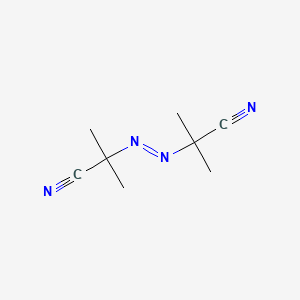
Azobis(isobutyronitrile) is a high-purity catalysts-auxiliary-agent supplied for industrial and specialty chemical applications. Contact our team for specifications, packaging options and lead times.
Product Specifications
| Appearance: | White crystalline |
|---|---|
| Assay: | 99% min |
| Color point: | 5 pieces/gram max |
| Melting point: | 100℃ ~ 103℃ |
| Ethanol insoluble matter: | 0.01% max |
| Volatiles: | 0.1% max |
| Hue: | 90 min |
| Batch detection rate: | 5% |
Applications
1. Polymerization Initiator
AIBN is extensively used to initiate free-radical polymerizations of monomers such as:
● Styrene
● Acrylonitrile
● Vinyl acetate
● Methyl methacrylate (MMA)
It is especially useful in producing plastics, rubbers, and resins due to its clean decomposition and ability to generate radicals under mild conditions.
2. Organic Synthesis
In organic chemistry, AIBN is employed in:
● Radical addition reactions
● Chain transfer reactions
● Hydrogen atom abstraction reactions
Its role is crucial in processes like thiol-ene and azide-alkyne click chemistry.
3. Foaming Agent
Upon decomposition, AIBN generates nitrogen gas, making it useful as a blowing agent for producing porous structures in plastics and rubber.
4. Laboratory and Industrial Research
AIBN is widely used in R&D labs and industrial-scale synthesis for designing novel polymers, drug delivery vehicles, and radical-based materials.
Benefits
✅ Efficient Radical Generator
Azobis(isobutyronitrile)丨CAS 78-67-1 decomposes cleanly to generate carbon-centered radicals and nitrogen gas, making it a predictable and reliable initiator.
✅ Controlled Decomposition
With a decomposition temperature around 65–75 °C, it offers precise control over reaction initiation, which is essential in polymer and fine chemical synthesis.
✅ High Purity and Compatibility
It is compatible with a wide range of solvents and monomers, and is available in high purity grades for both lab and industrial use.
✅ Versatile Usage
AIBN is suited for both batch and continuous polymerization processes, making it a cornerstone in the manufacturing of synthetic polymers.
Previous
Sodium Triacetoxyborohydride丨CAS 56553-60-7
Next
Conclusion
A concise summary and suitability assessment for this product is available on request. Contact our team to discuss whether it fits your process and quality requirements.