CAS · 5907-38-0
Product Overview
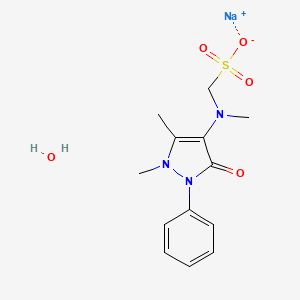
Analgin is a high-purity a-api supplied for industrial and specialty chemical applications. Contact our team for specifications, packaging options and lead times.
Product Specifications
| Grade | EP10 |
|---|---|
| Appearance | White or almost white, crystalline powder |
| Solubility | Very soluble in water, soluble in ethanol (96%), practically insoluble in methylene chloride |
| Identification | |
| A. IR | The sample spectrum complies with the reference standard spectrum |
| D. Sodium reaction | Should comply |
| Appearance of solution | Clear and not more than BY6 |
| Acidity or alkalinity | Should comply |
| Impurity C | Not more than 0.5% |
| Impurity E | Not more than 0.15% |
| Unspecified impurities | Not more than 0.05% |
| Total impurities | Not more than 0.5% |
| Sulfates | Not more than 0.1% |
| Loss on drying | 4.9% to 5.3% |
| Assay (dried substance) | 99% to 101% |
Applications
Analgin (CAS 5907-38-0), also known as metamizole sodium, is a non-opioid analgesic and antipyretic compound widely used in the pharmaceutical sector. It is primarily applied for the relief of moderate to severe pain, including headaches, toothaches, postoperative pain, and musculoskeletal discomfort. In addition, Analgin is effective in reducing fever when conventional treatments are insufficient. It is often formulated in tablets, capsules, injections, and suppositories, making it suitable for both oral and parenteral administration. In clinical practice, it may also be used in combination with antispasmodics for the management of colic and spastic pain, enhancing therapeutic outcomes.
Benefits
The benefits of Analgin lie in its rapid onset of action, broad spectrum of pain-relieving effects, and strong antipyretic properties. Unlike opioids, it does not induce dependence, and its effectiveness against both nociceptive and visceral pain makes it versatile in pain management. Its injectable form provides an important option for patients who cannot take oral medications or who require immediate relief. Furthermore, Analgin demonstrates synergistic benefits when combined with other agents, reducing the required dose of each and minimizing potential side effects. Its affordability and accessibility also make it an important medicine in many regions, particularly where cost-effective solutions are needed.
Conclusion
In conclusion, Analgin remains a valuable pharmaceutical agent for pain and fever management, particularly where quick, reliable relief is essential. Its versatility in formulation, rapid action, and compatibility with other therapeutic agents underscore its continued relevance in clinical use. While certain regulatory restrictions apply in some countries due to concerns over rare side effects, Analgin continues to provide significant benefits in healthcare systems worldwide, supporting both patient comfort and effective treatment outcomes.
Previous
Next