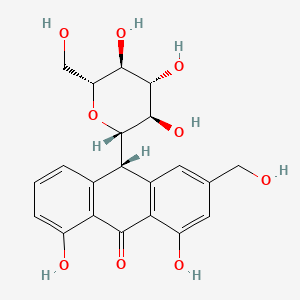
CAS · 1415-73-2
Product Overview
Aloin is a high-purity plant-extracts-natural-products supplied for industrial and specialty chemical applications. Contact our team for specifications, packaging options and lead times.
Product Specifications
| Property | Specification |
|---|---|
| Appearance | Fine powder |
| Color | Light Yellow |
| Odor | Characteristic |
| Assay (HPLC) | Aloin A+B: 95.0% min, Aloin A: 90% min |
| Sieve Analysis | 100% pass 80 mesh |
| Loss on Drying | 5.0% max |
| Residue On Ignition | 4.5% max |
| Heavy Metals | 10 ppm max |
| Arsenic (As) | 2 ppm max |
| Lead (Pb) | 2 ppm max |
| Mercury (Hg) | 0.1 ppm max |
| Cadmium (Cd) | 2 ppm max |
| Total Plate Count | 1000 cfu/g max |
| Yeast & Mold | 100 cfu/g max |
| E. Coli | Negative |
| Salmonella | Negative |
| Staphylococcus | Negative |
Applications
1. Pharmaceutical and Medicinal Use
√ Laxative Agent
● Primary Use: Aloin丨CAS 1415-73-2 is widely known for its use as a natural stimulant laxative. It increases intestinal water content and stimulates peristalsis (intestinal contractions), promoting bowel movements.
● Often included in over-the-counter herbal laxatives, but due to regulatory concerns, its internal use has become limited or restricted in some countries.
√ Anti-inflammatory Activity
● Aloin has demonstrated anti-inflammatory effects in various studies by inhibiting pro-inflammatory mediators such as TNF-α and interleukins, potentially making it useful for conditions involving inflammation.
√ Antioxidant Properties
● Exhibits antioxidant behavior, protecting cells from oxidative stress by scavenging free radicals, and is being investigated for potential protective effects against oxidative-related diseases.
√ Antimicrobial Properties
● Aloin has shown inhibitory effects against certain bacteria and fungi, making it potentially useful in topical treatments for skin infections or as a preservative in natural formulations.
2. Cosmetic and Personal Care Applications
√ Skin Soothing and Healing
● Due to its anti-inflammatory and antimicrobial properties, aloin is included in some cosmetic formulations for soothing irritated skin, acne-prone skin, and minor wounds or burns.
● It is often used in aloe-based skincare products like creams, gels, and lotions.
√ Anti-aging and Moisturizing Effects
● Aloin can contribute to improved skin hydration and elasticity by promoting collagen production and reducing oxidative damage, potentially offering anti-aging benefits.
3. Research and Nutraceuticals
√ Cancer Research
● Preliminary studies suggest that Aloin丨CAS 1415-73-2 may have anticancer potential, possibly by inhibiting tumor growth and inducing apoptosis (programmed cell death) in certain cancer cell lines. However, further research is needed to confirm efficacy and safety in clinical settings.
√ Immunomodulatory Effects
● Research indicates that aloin may influence the immune system, either by enhancing immune response or modulating inflammatory cytokines, which could be useful in developing immune-supportive supplements.
√ Natural Product Chemistry
● Aloin is frequently studied as part of broader research into plant-derived bioactive compounds, particularly those from Aloe species. It is a valuable model compound for studying C-glycosides and anthraquinone derivatives.
Benefits
√ Natural Origin
● Extracted directly from Aloe plants, aloin appeals to the natural and herbal medicine markets, particularly for consumers seeking plant-based remedies.
√ Potent Laxative Effect
● Provides fast and effective relief for occasional constipation, though care must be taken to avoid overuse due to potential gastrointestinal side effects.
√ Wide Biological Activity
● Demonstrates a range of beneficial effects, including antioxidant, anti-inflammatory, antibacterial, and possibly anticancer properties.
√ Potential for Topical Use
● Beneficial for skin care, especially in managing inflammation, redness, minor wounds, and microbial issues.
Conclusion
Aloin丨CAS 1415-73-2 is a versatile, naturally occurring compound with well-established laxative effects and promising anti-inflammatory, antimicrobial, and antioxidant properties. It continues to be of significant interest in pharmaceutical, cosmetic, and nutraceutical research and development. While its internal use is more regulated today due to safety considerations, it remains valuable for topical applications and scientific study, especially in the context of Aloe-based bioactives.
Previous
Next
Conclusion
A concise summary and suitability assessment for this product is available on request. Contact our team to discuss whether it fits your process and quality requirements.