
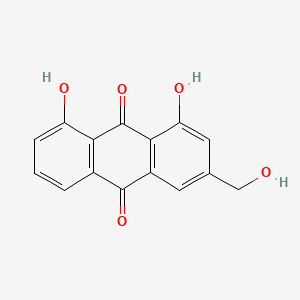
CAS · 481-72-1
Product Overview
Aloe-emodin is a high-purity pharmaceutical-intermediates supplied for industrial and specialty chemical applications. Contact our team for specifications, packaging options and lead times.
Product Specifications
| Appearance | Light to dark orange powder |
|---|---|
| Assay by HPLC | 95% min |
| Identification by HPLC | The RT of the principal peak in sample preparation should match with the RT of the principal peak of the standard preparation in assay by HPLC |
| Loss on drying | 0.5% max |
| Residue on ignition | 0.2% max |
| Water content | 0.5% max |
| Related Substance by HPLC | Emodine: 0.1% max Impurity at RRT 1.65: 1% max Impurity at RRT 1.70: 2% max Rhein: 1% max Single Impurity: 1% max Total Impurity: 5% max Aloin Content: 0.1% max |
Applications
Aloe-emodin is a naturally occurring anthraquinone widely applied in pharmaceutical, cosmetic, and research settings. It is primarily used for its laxative properties, being incorporated into herbal formulations and natural remedies to promote bowel movement and support digestive health. In the cosmetic and skincare industry, aloe-emodin is explored for its anti-inflammatory, antibacterial, and antioxidant properties, making it a candidate for acne treatments, skin-soothing products, and anti-aging formulations. Additionally, it serves as a research tool in pharmacology and medicinal chemistry for studying anticancer, antiviral, and antibacterial activities, as it has shown potential in modulating cell proliferation and apoptosis in various studies. Aloe-emodin is also employed as a chemical intermediate in the synthesis of derivatives and analogs for drug discovery and experimental therapeutics.
Benefits
The benefits of aloe-emodin derive from its diverse bioactivity and multifunctional therapeutic potential. Its laxative effect provides a natural and gentle approach to relieving constipation, supporting gastrointestinal health. The compound's antioxidant properties help combat oxidative stress, which is linked to aging, inflammation, and cellular damage. Its anti-inflammatory and antibacterial activities further extend its utility in topical formulations, promoting skin health and mitigating irritation or infections. In pharmacological research, aloe-emodin's ability to modulate signaling pathways and influence cancer cell growth makes it a valuable candidate for drug development and mechanistic studies. Additionally, its stability and compatibility with various solvents and formulations enhance its practical utility in both experimental and applied contexts.
Conclusion
In summary, aloe-emodin is a bioactive anthraquinone with broad applications in pharmaceuticals, skincare, and research. Its roles in promoting digestive health, supporting skin care, and enabling pharmacological investigations, combined with benefits such as antioxidant, anti-inflammatory, and antibacterial properties, make it a versatile and valuable compound. Aloe-emodin continues to contribute to natural medicine, cosmetic formulations, and drug discovery, highlighting its importance as both a functional ingredient and a research tool.
Previous
4-(Chloromethyl)benzoic Acid丨CAS 1642-81-5
Next