CAS · 50-76-0
Product Overview
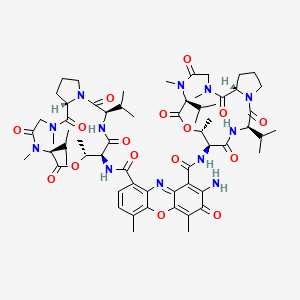
Actinomycin D is a high-purity a-api supplied for industrial and specialty chemical applications. Contact our team for specifications, packaging options and lead times.
Product Specifications
| Grade: | USP35 |
|---|---|
| Appearance: | Bright-red crystal or powder, almost odorless |
| Potency: | 950 µg/mg ~ 1030 µg/mg |
| Melting point: | 243–248°C |
| Specific rotation: | -292° ~ -317° |
| Solubility: | Freely soluble in alcohol, soluble in water at 10°C, slightly soluble in water at 37°C, very slightly soluble in ether |
| Ratio (A240/A445): | 1.30 ~ 1.50 |
| Loss on drying (2h at 105℃): | 5.0% max |
| Residual on ignition: | 0.1% max |
| Heavy metal: | 10 ppm max |
| Molds and yeasts (total plate count): | 100 cfu/g max |
Applications
1. Anticancer Agent
Used as a chemotherapeutic drug in treating:
Wilms' tumor
Rhabdomyosarcoma
Ewing's sarcoma
Gestational trophoblastic neoplasia (choriocarcinoma)
Testicular cancer
Works by intercalating into DNA, preventing RNA synthesis, and inducing apoptosis in rapidly dividing cells.
2. Molecular Biology Research
Applied in gene expression studies to inhibit RNA polymerase.
Utilized for:
Studying mRNA stability
Investigating transcriptional regulation
Understanding DNA-RNA interactions
3. Antibiotic Research
Exhibits antibacterial activity against Gram-positive bacteria.
Serves as a model compound for studying antibiotic mechanisms of action.
Benefits
✅ High Potency
Effective at very low concentrations due to strong DNA-binding ability.
✅ Broad Antitumor Activity
Used in combination chemotherapy regimens to enhance treatment efficacy.
✅ Tool for Gene Expression Control
Essential for researchers analyzing mRNA decay and transcriptional activity.
✅ Natural Origin
Derived from microbial sources, showing the potential of natural products in modern medicine.
Conclusion
Actinomycin D (CAS 50-76-0) is a powerful DNA-binding antibiotic with significant applications in cancer treatment and molecular biology research. Its role in chemotherapy and gene expression studies makes it a critical compound in both clinical and laboratory settings.
Previous
Amoxicillin Sodium丨CAS 34642-77-8
Next