
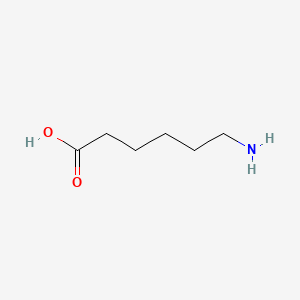
CAS · 60-32-2
Product Overview
6-Aminocaproic acid丨60-32-2, also known as epsilon-aminocaproic acid (EACA), is a synthetic amino acid derivative commonly used in various fields, including pharmaceuticals, biochemistry, and clinical medicine. It is a cyclic amide of glutamic acid and is often employed as a medication, research chemical, and chemical intermediate.
Known for its anti-fibrinolytic properties, 6-Aminocaproic acid is widely utilized in treating conditions that involve excessive bleeding and for other therapeutic purposes. This compound's ability to inhibit the activity of enzymes that break down fibrin (a protein essential for blood clotting) makes it valuable in treating hemorrhagic conditions.
In this article, we will explore the applications and benefits of 6-Aminocaproic acid in both medical and non-medical fields, highlighting its diverse uses and therapeutic potential.
Product Specifications
| Property | Specification |
|---|---|
| Appearance | Colourless crystals or white crystalline powder |
| Assay | 98-102% |
| IR Spectrum | In accordance with structure |
| pH | 7.5-8 |
| Heavy metals | Not more than 10ppm |
| Loss on drying | Not more than 0.5% max |
| Residue on ignition | Not more than 0.2% |
Applications
Detailed application notes for this product are available on request. Contact our technical team for the full application dossier, formulation guidance and regulatory documentation.
Benefits
1. Prevention of Excessive Bleeding
The primary benefit of 6-Aminocaproic acid is its ability to control excessive bleeding. By inhibiting fibrinolysis, the compound prevents the premature breakdown of blood clots, helping to stabilize clot formation and reduce blood loss during surgeries, traumatic injuries, and bleeding disorders.
Postoperative Care: One of the most important benefits of 6-Aminocaproic acid is its role in postoperative care. It is often used in surgeries, such as cardiac surgery or organ transplantations, to reduce the risk of excessive bleeding. By minimizing blood loss, it aids in the recovery process and reduces the need for blood transfusions.
Control of Menstrual Bleeding: For women suffering from menorrhagia, 6-Aminocaproic acid offers a non-hormonal treatment option to manage excessive menstrual bleeding, thereby improving quality of life and reducing the need for invasive treatments like hysterectomy.
2. Non-Toxic and Well-Tolerated
6-Aminocaproic acid is generally well-tolerated by most individuals. It is often preferred over more aggressive anticoagulant therapies because it does not increase the risk of thrombosis (clot formation) in most cases. The compound's non-toxic nature makes it suitable for both short-term and long-term use in various clinical settings.
Minimal Side Effects: While the drug can cause mild side effects, such as nausea, vomiting, or diarrhea, these effects are generally rare and are reversible once the drug is discontinued.
3. Affordable and Accessible
6-Aminocaproic acid丨60-32-2 is relatively inexpensive compared to other bleeding control agents. This affordability makes it a cost-effective option for patients undergoing surgery, trauma care, or cancer treatment. Its availability also allows for broader usage in developing countries, where medical resources may be limited.
4. Enhancement of Surgical Outcomes
In the context of surgeries, particularly those that carry a high risk of bleeding, 6-Aminocaproic acid enhances surgical outcomes by reducing blood loss and promoting clot stability. This results in faster recovery times, a reduction in transfusion requirements, and a decrease in the overall morbidity associated with significant blood loss.
Conclusion
6-Aminocaproic acid丨60-32-2 is a highly useful compound with diverse applications in medicine, research, and veterinary care. Its most notable benefit is its ability to prevent excessive bleeding by inhibiting fibrinolysis, making it invaluable in managing postoperative bleeding, trauma-related hemorrhage, and menorrhagia. Additionally, its low cost, minimal side effects, and effectiveness in various medical contexts make it an essential tool for clinicians worldwide.
As a research tool, 6-Aminocaproic acid aids in the study of proteases, blood coagulation, and cellular processes, contributing to advancements in both basic and applied biomedical sciences. Despite its specific applications, this compound's broad utility across different fields highlights its importance in improving health outcomes and supporting scientific advancements.
Previous
1-[2-(Dimethylamino)ethyl]-1H-tetrazole-5-thiol丨CAS 61607-68-9
Next