CAS · 626-43-7
Product Overview
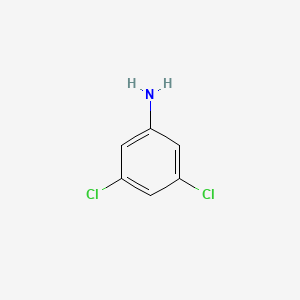
3,5-Dichloroaniline is a high-purity pesticide-intermediate supplied for industrial and specialty chemical applications. Contact our team for specifications, packaging options and lead times.
Product Specifications
| Appearance: | White to Grey or Dark Grey to Violet to Brown Powder, Crystals, Crystalline Powder or Solid |
|---|---|
| Purity (GC): | 97.5% min |
| Melting point: | 47-53°C |
| IR: | Conforms to Structure |
Applications
1. Intermediate in the Synthesis of Pharmaceuticals and Agrochemicals
● 3,5-Dichloroaniline is a precursor for the synthesis of various pharmaceutical compounds and agrochemicals. It is involved in the production of medicinal products, pesticides, and herbicides. Its ability to participate in various substitution reactions makes it a useful building block for creating complex organic molecules.
2. Manufacturing of Pesticides and Herbicides
● 3,5-Dichloroaniline is used in the synthesis of pesticides and herbicides. It can act as a precursor in the production of chlorinated herbicides like 2,4-Dichlorophenoxyacetic acid (2,4-D), a widely used selective herbicide in agriculture. These herbicides help control the growth of unwanted plants, thus increasing crop yields.
3. Dye and Pigment Industry
● The compound is involved in the production of dyes and pigments. 3,5-Dichloroaniline can be used as an intermediate in the synthesis of azo dyes, which are commonly used in textile, paper, and leather industries to produce a wide range of colors. These dyes are also important in the printing and packaging industries.
4. Chemical Synthesis of Aromatic Compounds
● As a chlorinated aromatic amine, 3,5-dichloroaniline plays an important role in the synthesis of other aromatic compounds. The compound can undergo nucleophilic substitution reactions, which makes it useful in the synthesis of a variety of chemicals for industrial applications.
5. Corrosion Inhibitors
● 3,5-Dichloroaniline is sometimes used as a component in the formulation of corrosion inhibitors. These chemicals are employed to protect metal surfaces from rust and corrosion, particularly in automobile and industrial machinery applications.
6. Polymer and Resin Industry
● The compound is occasionally used in the production of polymers and resins, especially in the manufacturing of high-performance plastics and coatings that require resistance to high temperatures and harsh chemicals. These polymers are applied in sectors like electronics, automotive, and construction.
Benefits
✅ Essential for Agricultural Chemicals
● 3,5-Dichloroaniline丨CAS 626-43-7 plays a key role in the production of herbicides and pesticides, helping control harmful weeds and pests that reduce crop productivity. These chemicals are critical for improving food security and agricultural efficiency.
✅ Intermediary for Pharmaceutical Synthesis
● The compound's versatility as a synthetic intermediate makes it valuable in pharmaceutical chemistry. It is used to develop new medications and therapeutic agents with specific biochemical activity, including anti-inflammatory and antibiotic properties.
✅ Chemical Versatility in Industrial Applications
● 3,5-Dichloroaniline is valuable in the production of dyes and pigments, adding vibrancy to textiles, plastics, and paper. The compound's ability to participate in chemical reactions makes it a crucial component in a wide array of industrial processes.
✅ Use in Corrosion Prevention
● The compound's role as a corrosion inhibitor helps preserve and extend the life of metal structures, machinery, and equipment, reducing maintenance costs and improving operational efficiency in industries such as automotive, construction, and marine engineering.
✅ High-Performance Material Applications
● It can also be used in the creation of polymers and plastics that are resistant to wear and chemicals, making it essential in the manufacturing of durable materials for various industrial uses.
Conclusion
3,5-Dichloroaniline丨CAS 626-43-7 is a versatile chemical with a wide range of applications in the pharmaceutical, agrochemical, dye, and polymer industries. Its use as an intermediate in the synthesis of herbicides, pesticides, and dyes makes it an important compound in agriculture, manufacturing, and industrial applications. Additionally, its role as a corrosion inhibitor and in polymer production highlights its industrial significance. However, due to its toxicity, care should be taken in its handling and disposal to prevent harm to human health and the environment.
Previous
Next