
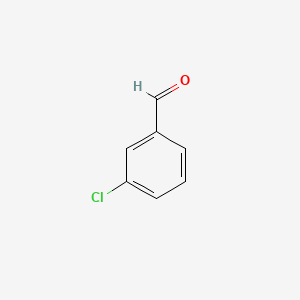
CAS · 587-04-2
Product Overview
3-Chlorobenzaldehyde is a high-purity pesticide-intermediate supplied for industrial and specialty chemical applications. Contact our team for specifications, packaging options and lead times.
Product Specifications
| Appearance: | Colorless to light yellow liquid or solid |
|---|---|
| Purity(GC): | 98%min. |
Applications
1. Pharmaceutical Intermediate
Used in the synthesis of various active pharmaceutical ingredients (APIs).
Helps construct heterocyclic compounds with antimicrobial, anti-inflammatory, or anticancer properties.
2. Agrochemical Synthesis
Serves as a precursor in the production of pesticides, fungicides, and herbicides.
Its halogenated aromatic aldehyde structure is suitable for building bioactive compounds for crop protection.
3. Flavors and Fragrances
Though not used directly as a flavor, it's sometimes applied in the synthesis of aromatic aldehydes and derivatives used in perfumery or fragrance research.
4. Organic Synthesis
Acts as a versatile building block in the synthesis of:
Schiff bases
Oximes
Hydrazones
These compounds are often used in chemical, medicinal, and material sciences.
5. Dye and Pigment Manufacturing
Intermediate in the production of certain azo dyes and colorants for industrial and textile applications.
Benefits
🔄 High Reactivity
The aldehyde group provides excellent reactivity in condensation reactions, such as aldol and Knoevenagel reactions.
🧱 Structural Versatility
Its electron-withdrawing chloro substituent affects reactivity and positioning in further reactions, making it useful in regioselective synthesis.
🧪 Research Utility
Commonly used in academic and industrial research for:
Synthesizing novel ligands
Developing coordination complexes with biological or catalytic activity
⚙️ Commercial Availability
Readily available and affordable, which makes it convenient for bulk synthesis and scalable chemical manufacturing.
Conclusion
3-Chlorobenzaldehyde (CAS 587-04-2) is a versatile intermediate with significant value in pharmaceuticals, agrochemicals, and organic synthesis. Its unique reactivity due to the aldehyde and chloro groups makes it a preferred starting material for constructing a variety of biologically active and industrially relevant compounds. With wide applicability and commercial accessibility, it continues to play a key role in fine chemical production and R&D across multiple sectors.
Previous
Next