
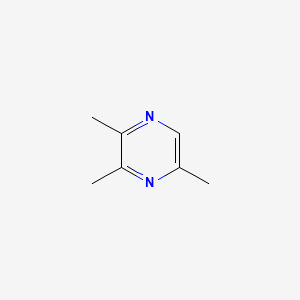
CAS · 14667-55-1
Product Overview
2,3,5-Trimethylpyrazine is a high-purity essences-and-fragrances supplied for industrial and specialty chemical applications. Contact our team for specifications, packaging options and lead times.
Product Specifications
| Appearance: | Achromatic to light yellow liquid |
|---|---|
| Purity (w%): | 98% min |
| Aroma: | Roast Aroma, Peanut Aroma, Filbert Aroma, Cocoa Aroma |
| Relative Density (25℃/25℃): | 0.960~0.990 |
| Refractive Index (20℃): | 1.500~1.509 |
Applications
1. Food Flavoring Industry
2,3,5-Trimethylpyrazine is primarily used as a flavoring agent due to its intense and pleasant roasted aroma.
Flavor enhancer in processed foods: Commonly added to enhance flavor in roasted nuts, coffee, chocolate, cereal products, and grilled meat analogs.
Used in Maillard reaction flavor blends: As a naturally occurring product of the Maillard reaction, it helps mimic roasted and caramelized food aromas in artificial flavor blends.
Beverage formulations: Found in coffee, cocoa, malt drinks, and other beverages requiring a warm or nutty character.
Snack and convenience food flavors: Used in potato chips, instant noodles, soups, and sauces for a savory, rich flavor profile.
2. Fragrance and Perfumery
Although less common than in food use, 2,3,5-trimethylpyrazine can be used as a minor component in perfumes and fragrances to create warm, nutty, and roasted notes.
3. Tobacco Industry
Used as a flavor additive in tobacco products to enhance the roasted and nutty character of certain blends, particularly in flavored cigarettes and e-cigarette liquids.
4. Pet Food Industry
Acts as a palatability enhancer in pet foods by contributing roasted and meaty notes that are appealing to animals.
5. Chemical Synthesis and Intermediates
Serves as an intermediate or building block in organic synthesis, particularly in the preparation of other substituted pyrazines.
Used in research involving heterocyclic compounds and structure-activity relationships.
6. Aroma Research and Sensory Studies
2,3,5-Trimethylpyrazine is widely used as a reference compound in:
Aroma compound libraries
GC-O (gas chromatography-olfactometry)
Food flavor chemistry research
Its sensory properties help define flavor fingerprints of roasted and processed foods.
Benefits
1. Strong and Desirable Aroma Characteristics
Possesses a powerful, warm, roasted, nutty, cocoa- or coffee-like odor even at low concentrations.
Highly effective at low dosage levels, making it economical for use in flavor formulations.
2. Natural Occurrence in Foods
Naturally formed in roasting, grilling, and baking through the Maillard reaction.
Accepted by consumers as a natural-like flavor, supporting clean-label claims in food products.
3. GRAS Status and Regulatory Acceptance
Recognized as Generally Recognized as Safe (GRAS) by the U.S. FDA for use in foods.
Approved by flavor regulatory bodies including FEMA (Flavor and Extract Manufacturers Association) and EU flavoring regulations.
4. Thermal Stability
Retains aroma during cooking and processing, making it suitable for baked, fried, and high-temperature food applications.
5. Versatility Across Flavor Types
Compatible with both sweet and savory flavor profiles (e.g., chocolate, coffee, roasted meat, nuts).
Enhances complexity and authenticity in composite flavor systems.
6. Low Usage Levels
Typical application concentrations are in the range of parts per million (ppm) or even lower, reducing cost and minimizing risk of overpowering the end product.
Conclusion
2,3,5-Trimethylpyrazine (CAS 14667-55-1) is a valuable aroma compound primarily used in the food and flavor industry for its roasted, nutty, and cocoa-like character. Its natural origin, strong sensory impact, regulatory safety, and versatility make it a staple in the formulation of processed food flavors, beverages, tobacco, and pet products. Additionally, it plays a role in fragrance and organic synthesis, further expanding its industrial utility.
Previous
Next