
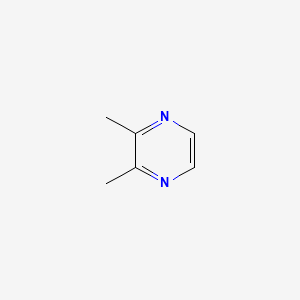
CAS · 5910-89-4
Product Overview
2,3-Dimethylpyrazine is a high-purity essences-and-fragrances supplied for industrial and specialty chemical applications. Contact our team for specifications, packaging options and lead times.
Product Specifications
| Appearance: | Achromatic to light yellow liquid |
|---|---|
| Purity: | 98.0% min |
| Aroma: | Roast Aroma, Coffee Aroma, Milk Aroma, Meat Aroma |
| Relative Density: | 1.000–1.022 |
| Refractive Index: | 1.505–1.509 |
Applications
1. Flavor and Fragrance Industry
Widely used as a flavoring agent to impart roasted, nutty, cocoa-like, or coffee-like notes in food products.
Commonly added to:
Roasted meats and snacks
Baked goods
Chocolate and coffee-flavored foods
Seasoning blends
2. Food and Beverage Manufacturing
Used in the development of natural and synthetic flavor formulations, especially in thermal processing flavors.
Employed in reaction flavor systems (e.g., Maillard reaction mixtures) to enhance savory depth.
3. Aroma and Sensory Research
Studied as a volatile organic compound (VOC) associated with cooked and fermented foods.
Used in aroma profile analysis of coffee, cocoa, soy sauce, and aged cheese.
4. Chemical Research and Synthesis
Functions as an intermediate in organic synthesis, particularly in the design of heterocyclic compounds.
May be used to develop other pyrazine derivatives with bioactive or sensory properties.
Benefits
Intense Aroma at Low Concentrations: Extremely effective at low ppm levels, reducing the amount required in formulations.
GRAS Status: Recognized as Generally Recognized As Safe (GRAS) by regulatory authorities such as the FDA when used in food.
Thermal Stability: Withstands high-temperature processes during food manufacturing.
Enhances Umami and Roasted Flavors: Boosts flavor complexity and mouthfeel in savory and sweet formulations.
Natural Occurrence: Found naturally in roasted and fermented products, aiding in the creation of "clean label" flavor profiles.
Conclusion
2,3-Dimethylpyrazine (CAS 5910-89-4) is a versatile and highly valued compound in the flavor and fragrance industry due to its distinctive roasted and nutty aroma. Its presence in natural food products and thermal reaction flavors makes it essential for enhancing sensory profiles in processed foods. In addition to its aromatic contributions, its stability, safety profile, and utility in chemical synthesis further underline its importance across multiple sectors.
Previous
Next