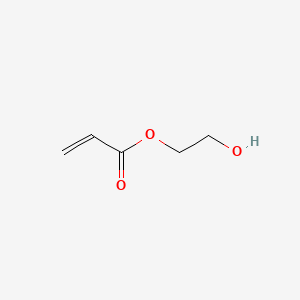
CAS · 818-61-1
Product Overview
2-Hydroxyethyl acrylate is a high-purity adhesives-sealants supplied for industrial and specialty chemical applications. Contact our team for specifications, packaging options and lead times.
Product Specifications
| Property | Specification |
|---|---|
| Appearance | Clear and transparent liquid, free from mechanical impurities |
| Ester content | 97% min |
| GC content | 97% min |
| Free acid (As AA) | 0.3% max |
| Water content | 0.3% max |
| Chroma | 20 APHA max |
| Inhibitor (MEHQ) | 200 ± 40 ppm max |
Applications
1. Coatings and Paints
HEA is widely used in automotive, industrial, and architectural coatings due to its ability to form durable polymer films.
● Improved adhesion: The hydroxyl group enhances bonding to substrates such as metal, plastic, and glass.
● Weather and chemical resistance: HEA-based polymers exhibit strong resistance to UV radiation, moisture, and chemicals.
● Flexibility and toughness: Its incorporation into coating systems improves film-forming properties, making coatings more flexible and less brittle.
Common systems include:
● UV-curable coatings
● Waterborne coatings
● Solvent-borne acrylic systems
2. Adhesives and Sealants
2-Hydroxyethyl acrylate丨CAS 818-61-1 enhances the adhesive strength, durability, and moisture resistance of both pressure-sensitive adhesives (PSAs) and structural adhesives.
● Crosslinking capacity: It participates in network formation, which improves the cohesion and heat resistance of adhesive layers.
● Hydrophilicity: Enhances wetting properties on various surfaces, especially important for difficult-to-bond materials.
Applications include:
● Packaging
● Electronics assembly
● Construction adhesives
3. Acrylic Resins and Polymers
2-Hydroxyethyl acrylate丨CAS 818-61-1 is used as a comonomer in the synthesis of acrylic resins that require functional hydroxyl groups for further reactions, such as polyurethane crosslinking.
● Polyurethane dispersions: HEA provides reactive sites for isocyanate-based curing, yielding high-performance coatings or elastomers.
● Thermoset systems: Useful in two-component or radiation-curable systems, especially in automotive clearcoats and industrial finishes.
4. Hydrogels and Biomedical Applications
Due to its biocompatibility and hydrophilicity, HEA is employed in the development of hydrogels for medical devices, contact lenses, and drug delivery systems.
● Swelling behavior: HEA-based hydrogels can absorb significant amounts of water, ideal for soft tissue applications.
● Polymer networks: Used in forming crosslinked networks for wound dressings, biosensors, and tissue engineering scaffolds.
5. Printing Inks and Photopolymers
HEA is an important component in UV-curable inks and photopolymer resins used for printing, electronics, and 3D printing.
● Fast curing: Enables rapid polymerization under UV light, critical for high-speed printing applications.
● Good surface properties: Enhances scratch resistance and adhesion of printed materials on various substrates.
Benefits
1. Dual Reactivity for Versatile Polymerization
The presence of both an acrylate double bond and a hydroxyl group makes HEA highly valuable for free radical polymerization and post-polymer modification.
● Customizable properties: Allows precise tuning of mechanical, chemical, and thermal properties of final products.
● Broad copolymerization compatibility: Works well with acrylates, methacrylates, styrene, and vinyl monomers.
2. Enhanced Adhesion and Crosslinking
2-Hydroxyethyl acrylate丨CAS 818-61-1 significantly improves adhesion to polar and non-polar surfaces due to its hydroxyl functionality, and also promotes crosslinking when cured with isocyanates or melamine resins.
● Better mechanical properties: Resulting polymers exhibit greater tensile strength, abrasion resistance, and impact durability.
● Weatherability: Ensures longer life span of coatings and adhesives in outdoor or harsh environments.
3. Hydrophilic and Biocompatible
Its hydrophilic nature makes it suitable for applications requiring water affinity or biological compatibility.
● Hydrogel formation: Efficient for biomedical uses requiring soft, water-absorbing materials.
● Improved wettability: Enhances flow and leveling in coatings and ink systems.
4. UV and Solvent Resistance
HEA-modified polymers exhibit strong UV resistance and solvent tolerance, making them ideal for both indoor and outdoor applications.
● Durable finishes: Coatings remain glossy and intact under sun and chemical exposure.
● Protective barrier: Enhances performance in packaging and protective film applications.
5. Low Volatility and High Reactivity
HEA has relatively low volatility and rapid curing potential, especially in radiation-curable systems, leading to faster production cycles and lower VOC emissions.
● Eco-friendly formulations: Used in waterborne and UV-curable systems for greener product development.
● Cost-effective processing: Reduced energy and time requirements during application and curing.
Conclusion
2-Hydroxyethyl acrylate丨CAS 818-61-1, is a highly versatile monomer widely employed across coatings, adhesives, resins, biomedical materials, and inks. Its unique combination of polymerizable acrylate and reactive hydroxyl functionality makes it indispensable in formulations that demand durability, adhesion, flexibility, and resistance to environmental stress. Whether enhancing performance in industrial coatings or enabling smart hydrogels for medical applications, HEA plays a critical role in modern material science.
Previous
Next
4,4-(4,4-Isopropylidenediphenoxy)bis(phthalic Anhydride)丨CAS 38103-06-9
Conclusion
A concise summary and suitability assessment for this product is available on request. Contact our team to discuss whether it fits your process and quality requirements.