
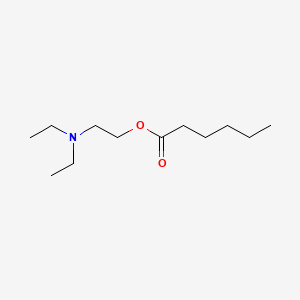
CAS · 10369-83-2
Product Overview
2-Diethylaminoethyl hexanoate丨CAS 10369-83-2, is a highly effective plant growth regulator (PGR). It belongs to the class of auxin-like compounds, but it exhibits multiple hormonal activities, including those similar to cytokinins and gibberellins, depending on concentration and application mode. DA-6 is increasingly utilized in agriculture, horticulture, and forestry for its broad-spectrum benefits in improving plant vigor, yield, and stress resistance.
Product Specifications
| Appearance | White solid powder |
|---|---|
| Assay | 98% min |
| Water | 0.5% max |
| pH | 6.0 to 9.0 |
| Acetone insolubles | 0.1% max |
Applications
A. Plant Growth Promotion
DA-6 promotes overall plant growth and biomass accumulation through several physiological mechanisms:
● Enhances photosynthesis by increasing chlorophyll content and improving stomatal conductance.
● Stimulates enzyme activity involved in metabolism and respiration.
● Promotes protein synthesis, nucleic acid metabolism, and sugar accumulation, supporting robust vegetative growth.
It is applied to a wide variety of crops, including rice, wheat, maize, cotton, soybeans, potatoes, vegetables, and fruit trees.
B. Seed Treatment and Germination Enhancement
● Seed Soaking or Coating with DA-6 can improve germination rates, seedling vigor, and early root development.
● Particularly useful in cold or adverse conditions, where it helps seeds overcome stress-induced dormancy.
C. Yield Improvement in Crops
2-Diethylaminoethyl hexanoate丨CAS 10369-83-2 has a proven effect in boosting crop yields by:
● Promoting flower bud differentiation and fruit setting.
● Reducing flower and fruit drop.
● Enhancing grain filling and fruit enlargement, leading to larger, more uniform produce.
D. Abiotic Stress Resistance
One of the most valuable properties of DA-6 is its ability to improve plant resistance to environmental stresses:
● Drought tolerance: Enhances water-use efficiency and reduces transpiration loss.
● Salinity and alkalinity: Supports ion balance and membrane stability under salt stress.
● Cold and heat stress: Increases antioxidant enzyme activity (e.g., SOD, CAT), mitigating oxidative damage.
● Pesticide and herbicide injury: Acts as a protective agent when crops are exposed to agrochemical toxicity.
E. Postharvest and Horticultural Applications
● Used in floriculture and ornamentals to improve flower longevity, color vibrancy, and plant aesthetics.
● In fruit trees, DA-6 promotes fruit enlargement, sweetness (sugar accumulation), and shelf life.
● Applied as a foliar spray or through irrigation systems.
Benefits
A. Multi-functional Growth Regulator
Unlike many PGRs that mimic only one hormone, DA-6 exhibits broad-spectrum activity:
● Auxin-like effects (cell elongation and division),
● Cytokinin-like effects (stimulating shoot growth and cell division),
● Gibberellin-like effects (promoting stem elongation and reproductive development).
This makes it a versatile and powerful tool in crop management programs.
B. Enhances Efficiency of Fertilizers and Pesticides
● DA-6 improves nutrient uptake, allowing crops to better utilize fertilizers.
● When mixed with pesticides or fungicides, DA-6 can reduce phytotoxicity and help plants recover faster from chemical stress.
● Acts as a synergist in tank mixes, enhancing the performance of other agro-inputs.
C. Low Toxicity and Environmentally Friendly
● DA-6 is biodegradable and non-toxic to humans, animals, and beneficial insects when used correctly.
● Its safe profile supports its use in eco-friendly farming, organic production (in some jurisdictions), and sustainable agriculture.
D. Broad Crop Compatibility
● Effective in a wide range of crops including cereals, legumes, vegetables, fruits, oilseeds, tuber crops, and ornamentals.
● Used globally in field crops, greenhouses, orchards, and nurseries.
Conclusion
2-Diethylaminoethyl hexanoate丨CAS 10369-83-2 is a potent and versatile plant growth regulator known for enhancing growth, yield, and stress resilience in a wide variety of crops. Its multi-hormonal activity, low toxicity, and ability to synergize with other inputs make it a valuable tool in modern sustainable agriculture. When applied with precision and care, DA-6 can significantly contribute to productivity, crop quality, and resilience in challenging environments, positioning it as a key component in future smart farming systems.
Previous
Next