CAS · 106-86-5
Product Overview
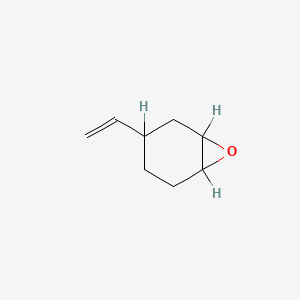
1,2-Epoxy-4-vinylcyclohexane is a high-purity adhesives-sealants supplied for industrial and specialty chemical applications. Contact our team for specifications, packaging options and lead times.
Product Specifications
| Appearance | Colorless liquid |
|---|---|
| Assay | 99% min |
| APHA Color | 30 max |
| Water | 0.1% max |
Applications
1,2-Epoxy-4-vinylcyclohexane is used as a versatile intermediate in polymer, coating, and specialty chemical synthesis. It participates in cationic and radical polymerization, making it valuable for producing high-performance resins, adhesives, and UV-curable materials. In the electronics industry, it contributes to formulations for insulating coatings, encapsulants, and dielectric materials due to its ability to generate polymers with excellent strength and chemical resistance. It is also employed in the preparation of specialty epoxy resins, crosslinking agents, and modifiers that enhance thermal and mechanical properties in composite materials. In fine chemical synthesis, the molecule's epoxide and vinyl functionalities allow selective functionalization, enabling use as a building block in pharmaceutical intermediates, agrochemical research, and advanced materials development. Its reactivity and compatibility with a wide range of monomers make it suitable for customized polymer architectures used in coatings, laminates, optical materials, and industrial composites.
Benefits
1,2-Epoxy-4-vinylcyclohexane offers the advantage of dual functionality, combining an epoxide group with a vinyl group, which provides multiple reaction pathways for tailored chemical transformations. This flexibility allows formulators to design materials with enhanced adhesion, chemical resistance, heat stability, and controlled crosslink density. Polymers derived from this compound often exhibit low shrinkage, high transparency, and strong mechanical strength, making them well suited for advanced coatings and electronic encapsulation. Its relatively high purity and stability improve reproducibility in both lab-scale and industrial processes. The compound's ability to engage in efficient polymerization under UV or thermal curing conditions supports faster production cycles and energy-saving manufacturing. Its compatibility with diverse monomers and resins increases formulation versatility, enabling the creation of high-performance materials optimized for demanding applications.
Conclusion
1,2-Epoxy-4-vinylcyclohexane is a valuable multifunctional intermediate used across polymer synthesis, specialty coatings, adhesives, and electronic materials. Its reactive epoxide and vinyl groups provide strong advantages for designing durable, high-performance polymers with excellent mechanical, thermal, and chemical properties. These features make it a practical and efficient component for a wide range of industrial and research applications.
Previous
Next