
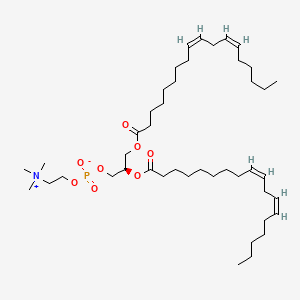
CAS · 998-06-1
Product Overview
Dilinoleoyl phosphatidyl choline is a high-purity organophosphorus-compounds supplied for industrial and specialty chemical applications. Contact our team for specifications, packaging options and lead times.
Product Specifications
| Purity(HNMR) | 97% Min |
|---|---|
| Appearance | Light yellow solid |
| Water content | 0.5% Max |
Applications
Dilinoleoyl phosphatidyl choline is primarily used in the food, cosmetic, pharmaceutical, and research industries due to its excellent emulsifying and bioactive properties. In food applications, it acts as a natural emulsifier, stabilizing oil-in-water emulsions in products such as spreads, dressings, beverages, and infant formulas. Its lipid profile, rich in polyunsaturated linoleic acid, also contributes to nutritional fortification, supporting cardiovascular health and essential fatty acid intake. In cosmetics and personal care formulations, it serves as a skin-conditioning agent and emollient, enhancing the texture, moisture retention, and stability of creams, lotions, and serums. In pharmaceutical and nutraceutical research, Dilinoleoyl phosphatidyl choline is employed as a model phospholipid for liposome and lipid nanoparticle formulations, enabling efficient drug delivery, controlled release, and improved bioavailability of hydrophobic compounds. In biochemical and cellular studies, it is used to investigate membrane structure, dynamics, and lipid–protein interactions, acting as a key component in artificial membranes, vesicles, and micellar systems. Additionally, it serves as a substrate for enzymatic assays, particularly in phospholipase activity studies, helping to elucidate lipid metabolism and signaling pathways.
Benefits
The compound offers multiple benefits that make it highly valuable across its applications. Its high content of linoleic acid enhances its nutritional and skin-beneficial properties, promoting cardiovascular health and supporting skin barrier function. Its amphiphilic structure allows effective emulsification and dispersion of hydrophobic compounds in aqueous systems, improving formulation stability and consistency. In drug delivery, its compatibility with liposomal and nanoparticle systems enables targeted delivery, reduced cytotoxicity, and enhanced cellular uptake of therapeutic agents. Its biocompatibility and low toxicity make it suitable for oral, topical, and parenteral applications. In research, its well-defined chemical structure ensures reproducibility in experimental models, facilitating accurate studies of membrane fluidity, lipid interactions, and enzyme kinetics. The phosphatidylcholine backbone also contributes to the maintenance of membrane integrity in cell culture and artificial membrane studies, providing a reliable tool for modeling physiological lipid environments. Moreover, its oxidative stability, when properly formulated, allows for extended shelf-life in commercial products without significant degradation of functional properties.
Conclusion
Dilinoleoyl phosphatidyl choline is a versatile phospholipid with wide-ranging applications in food, cosmetics, pharmaceuticals, and research. It combines emulsifying capabilities, nutritional benefits, and biocompatibility, making it an effective ingredient for stabilizing formulations, supporting skin and cardiovascular health, and enabling advanced drug delivery systems. In scientific research, it provides a reliable model for studying membranes and lipid-mediated processes. Its structural characteristics, functional versatility, and safety profile make it a valuable tool in both industrial applications and laboratory studies, offering practical benefits in formulation development, nutritional enhancement, and biochemical investigations.
Previous
Next