
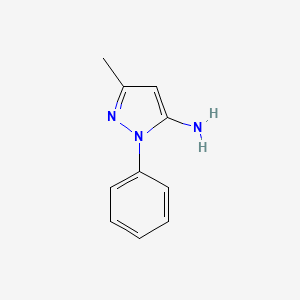
CAS · 1131-18-6
Product Overview
5-Amino-3-methyl-1-phenylpyrazole is a high-purity dyes-pigments supplied for industrial and specialty chemical applications. Contact our team for specifications, packaging options and lead times.
Product Specifications
| Appearance: | White to off-white color powder |
|---|---|
| Assay (HPLC): | 98% min |
| Identification: | IR |
| Melting Point: | 113°C to 117°C |
| Boiling Point (760 mmHg): | 328°C to 334°C |
| Flash Point: | 110°C min |
| Water (K.F): | 1% max |
Applications
5-Amino-3-methyl-1-phenylpyrazole (CAS 1131-18-6) is a heterocyclic compound widely used as an intermediate in pharmaceutical and agrochemical synthesis. Its pyrazole scaffold and amino functionality make it a valuable building block for the development of bioactive molecules, including anti-inflammatory agents, kinase inhibitors, and enzyme modulators. It is also employed in the synthesis of dyes, pigments, and fine chemicals, as well as in medicinal chemistry for structure–activity relationship (SAR) studies to optimize potency, selectivity, and pharmacokinetic properties of pyrazole-based compounds.
Benefits
The benefits of 5-Amino-3-methyl-1-phenylpyrazole stem from its reactive amino group and stable pyrazole ring, which allow versatile chemical transformations such as acylation, alkylation, and condensation reactions. The phenyl and methyl substitutions provide steric and electronic properties that enhance molecular stability and modulate biological activity. Its chemical stability, solubility in common organic solvents, and compatibility with standard coupling reagents make it practical for laboratory and industrial synthesis of bioactive compounds and heterocyclic derivatives.
Conclusion
5-Amino-3-methyl-1-phenylpyrazole is a versatile intermediate with broad applications in pharmaceutical, agrochemical, and fine chemical synthesis. Its reactive amino group and stable pyrazole scaffold facilitate efficient derivatization and bioactive molecule design. By supporting the development of therapeutic agents and functional heterocycles, it remains an important compound in chemical research and industrial applications.
Previous
7,7,8,8-Tetracyanoquinodimethane丨CAS 1518-16-7
Next