
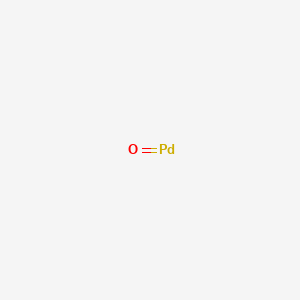
CAS · 1314-08-5
Product Overview
Palladium monoxide is a high-purity catalysts-auxiliary-agent supplied for industrial and specialty chemical applications. Contact our team for specifications, packaging options and lead times.
Product Specifications
| Appearance | Grey to Black Powder or Chunks |
|---|---|
| Pd (Palladium) | ≥86% |
| PdO (Palladium Oxide) | ≥99.9% |
| Pd (Palladium) | ≥86% |
| Pt (Platinum) | ≤0.02% |
| Rh (Rhodium) | ≤0.02% |
| Ir (Iridium) | ≤0.02% |
| Au (Gold) | ≤0.02% |
| Ag (Silver) | ≤0.005% |
| Cu (Copper) | ≤0.005% |
| Fe (Iron) | ≤0.005% |
| Ni (Nickel) | ≤0.005% |
| Al (Aluminum) | ≤0.005% |
| Pb (Lead) | ≤0.005% |
| Si (Silicon) | ≤0.005% |
Applications
Catalysis in Chemical Reactions
Palladium monoxide丨1314-08-5 is widely used as a catalyst in various chemical reactions, particularly in hydrogenation and dehydrogenation processes. It plays a significant role in the fine chemical and pharmaceutical industries, enabling the selective hydrogenation of alkenes, alkynes, and other unsaturated compounds. It is also utilized in the production of specialty chemicals and high-value organic compounds.
Hydrogen Storage and Release
Due to its ability to absorb and release hydrogen, palladium monoxide is studied for its applications in hydrogen storage technologies. It can serve as a material for hydrogen storage systems that are used in fuel cells, energy storage, and hydrogen-powered vehicles.
Electronics and Sensor Technologies
Palladium monoxide is used in the production of electronic components and sensors. It is particularly useful in the fabrication of sensitive hydrogen sensors, as palladium compounds are known to interact with hydrogen molecules, altering the material's properties and allowing for the detection of hydrogen gas concentrations.
Dehydrogenation Reactions
In addition to hydrogenation, palladium monoxide is involved in dehydrogenation processes, especially in the petrochemical industry. These processes are essential for the production of high-value chemicals, including those used in the manufacture of plastics, polymers, and other industrial materials.
Synthesis of Organopalladium Complexes
Palladium monoxide is used as a precursor in the synthesis of organopalladium complexes, which are critical in various organic reactions, such as cross-coupling reactions (e.g., Suzuki and Heck reactions). These complexes are valuable in the production of pharmaceuticals, agrochemicals, and advanced materials.
Benefits
High Catalytic Efficiency
As a catalyst, palladium monoxide is highly efficient in promoting hydrogenation, dehydrogenation, and other key reactions. Its ability to selectively catalyze these reactions makes it valuable in both industrial and research settings.
Hydrogen Storage and Release Capability
One of the significant benefits of palladium monoxide is its capacity to absorb and release hydrogen efficiently. This property makes it an ideal candidate for hydrogen storage and fuel cell applications, contributing to the development of cleaner energy systems.
Versatility in Chemical Synthesis
Palladium monoxide丨1314-08-5 serves as a versatile reagent in organic synthesis, particularly in the formation of valuable palladium complexes for use in cross-coupling reactions and other complex chemical transformations.
Durability and Stability
Palladium monoxide is relatively stable under many conditions, making it a reliable catalyst and reagent in various applications. Its ability to withstand high temperatures and harsh chemical environments enhances its utility in industrial processes.
Critical Role in Green Chemistry
Given its efficiency as a catalyst, palladium monoxide plays an essential role in advancing green chemistry by enabling reactions that minimize waste and energy consumption. Its use in hydrogenation, for example, supports the development of more sustainable chemical processes.
Conclusion
Palladium monoxide丨1314-08-5 is an important compound in the fields of catalysis, hydrogen storage, and electronic sensor technologies. Its catalytic efficiency, ability to absorb hydrogen, and versatility in chemical synthesis make it a key material in various industrial and scientific applications. Its stability and role in advancing green chemistry further highlight its significance in modern chemical and energy systems.
Previous
Iridium Dioxide丨CAS 12030-49-8
Next