
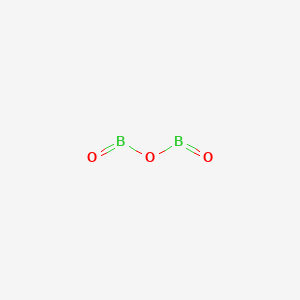
CAS · 1303-86-2
Product Overview
Boron oxide丨1303-86-2, is an inorganic compound that plays an important role in various industrial, technological, and chemical processes. It is typically found as a colorless or white solid and is known for its glass-forming properties. Below are some key applications and benefits of boron oxide:
1. Glass Industry
Production of Borosilicate Glass: One of the most well-known applications of boron oxide is in the production of borosilicate glass. Borosilicate glass, which contains boron oxide as a key ingredient, is valued for its excellent resistance to thermal shock, chemical corrosion, and mechanical stress. It is commonly used in laboratory glassware, cooking vessels (e.g., Pyrex), and even in high-performance industrial applications like fiber optics.
Optical Glass: Boron oxide is also used in the manufacture of optical glass. Its ability to reduce the refractive index while improving the glass's thermal properties makes it ideal for lenses, prisms, and other optical components used in cameras, microscopes, and various optical instruments.
Glass Fiber: Boron oxide is used in the production of high-strength glass fibers, which are employed in a wide range of applications, from construction materials (such as reinforced concrete) to electrical insulators. These fibers provide both strength and lightness, making them valuable for composites in the aerospace, automotive, and construction industries.
2. Ceramics
Fluxing Agent in Ceramics: In the ceramics industry, boron oxide acts as a fluxing agent, lowering the melting point of silica and promoting the formation of a stable glassy phase in ceramic glazes. It enhances the smoothness, hardness, and overall durability of ceramics.
Production of Refractory Materials: Boron oxide is used in the formulation of refractory materials, which are designed to withstand extreme heat. It enhances the resistance of ceramics and bricks to high temperatures, making them ideal for furnaces, kilns, and other high-temperature applications.
3. Chemical Synthesis and Catalysis
Catalyst in Chemical Reactions: Boron oxide丨1303-86-2 is used as a catalyst or catalyst support in various chemical reactions. For example, it can facilitate the dehydration of alcohols, the esterification of carboxylic acids, and the polymerization of certain monomers. Its role as a Lewis acid enhances its ability to catalyze a range of reactions, making it useful in the production of fine chemicals and pharmaceuticals.
Borate Compounds Production: Boron oxide is a key starting material for the synthesis of borate compounds, which are used in a variety of applications, including detergents, fire retardants, and antifungal agents.
4. Agricultural and Environmental Applications
Fertilizer Production: Boron is an essential micronutrient for plants, and boron oxide is used in the manufacture of boron-containing fertilizers. These fertilizers are crucial for preventing boron deficiency in plants, which can lead to stunted growth and poor crop yields. Boron oxide is particularly beneficial in improving the quality of fruits and vegetables, especially in crops like grapes, almonds, and tomatoes.
Soil Amendment: In some cases, boron oxide is used to amend soil that is deficient in boron. It helps in enhancing the efficiency of plant growth and optimizing agricultural production in boron-deficient regions.
5. Electronic and Semiconductor Industry
Semiconductor Manufacturing: Boron oxide丨1303-86-2 plays a role in the semiconductor industry, particularly in the production of electronic components. It is used in the manufacturing of certain types of semiconductors, where it acts as a dopant to modify the electrical properties of materials like silicon and germanium.
Conductor in Microelectronics: In microelectronics, boron oxide is utilized in various processes that require low-melting-point compounds. It serves as a material that can be used in the creation of conductive pathways and as a component in the production of conductive glass used in various electronic devices.
6. Metallurgy
Fluxing Agent in Metal Production: Boron oxide is used as a flux in the metallurgy industry, particularly in the production of metals like aluminum and steel. It helps remove impurities, such as oxides and silicates, by forming a protective layer that prevents further oxidation. This improves the purity and quality of metals.
Welding and Soldering: Boron oxide is often included in flux compositions for welding and soldering. It helps to reduce the melting point of metal oxides, facilitating the bonding of metals during these processes.
7. Fire Retardant and Insulation Materials
Flame Retardants: Boron oxide丨1303-86-2 is used as a flame retardant in various materials, including polymers and textiles. It can be incorporated into materials to prevent or delay ignition, thus improving safety in products such as furniture, clothing, and building materials.
Thermal Insulation: Boron oxide-based materials are employed in thermal insulation products, providing resistance to heat and improving energy efficiency in applications like construction, industrial equipment, and automotive parts.
8. Other Specialized Applications
Lubricants and Greases: Boron oxide can be added to lubricants and greases to improve their performance under high temperatures. It helps reduce friction and wear, making it valuable in automotive and industrial machinery.
Nuclear Applications: Boron compounds, including boron oxide, are important in the nuclear industry. Boron is used in neutron capture applications, particularly in control rods for nuclear reactors, where boron helps absorb excess neutrons and regulate the chain reaction.
Product Specifications
| Property | Specification |
|---|---|
| Boron oxide (B2O3) | 99% min |
| Na2O + K2O | 0.02% max |
| Fe2O3 | 0.005% max |
| S | 0.025% max |
| Cr, Co, Mn, Ni | 0.005% max |
| Pb | 0.005% max |
| Cd | 0.005% max |
| Cu | 0.005% max |
| Water content | 0.5% max |
| Particle size | 100-150 mesh |
Applications
Detailed application notes for this product are available on request. Contact our technical team for the full application dossier, formulation guidance and regulatory documentation.
Benefits
● Thermal and Chemical Stability: Boron oxide provides excellent stability in high-temperature and corrosive environments. It is used to improve the thermal resistance of various materials, making them more durable in extreme conditions.
● Versatility in Industrial Applications: Its broad range of applications-from glass and ceramics to electronics and agriculture-makes boron oxide a versatile compound for multiple industries.
● Environmental Benefits: When used as a fluxing agent or in fertilizers, boron oxide can help optimize manufacturing processes and improve agricultural productivity, contributing to more sustainable practices in these sectors.
● Improved Material Properties: Boron oxide enhances the mechanical, thermal, and optical properties of materials, making them stronger, more heat-resistant, and more effective in specialized applications like fiber optics and semiconductors.
Conclusion
Boron oxide丨1303-86-2 is an essential material with a wide range of industrial, agricultural, and technological applications. Its properties, such as its ability to lower the melting point of silica, form stable glasses, and act as a catalyst, make it invaluable in industries like glass manufacturing, ceramics, semiconductors, metallurgy, and agriculture. The diverse applications and benefits of boron oxide highlight its importance in advancing technologies and improving efficiency in various fields.
Previous
Next