
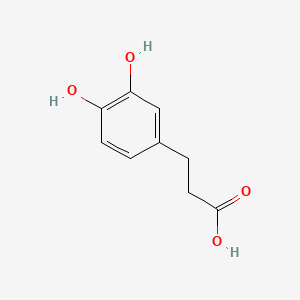
CAS · 1078-61-1
Product Overview
3,4-Dihydroxyphenylpropionic acid is a high-purity plant-extracts-natural-products supplied for industrial and specialty chemical applications. Contact our team for specifications, packaging options and lead times.
Product Specifications
| Appearance: | Light-Yellow or White-like powder |
|---|---|
| Purity (HPLC): | 99.0% min |
| Assay: | 99.0%-101.0% |
| Solubility: | Soluble in water |
| Identification: | The infrared absorption spectrum is consistent with that of the reference standard |
| Loss on drying: | 0.5% max |
| Residue on Ignition: | 0.1% max |
| Chloride: | 0.01% max |
| Heavy metals: | 10ppm max |
Applications
1. Pharmaceutical and Biomedical Research
a. Dopamine Metabolite in Neuroscience
3,4-Dihydroxyphenylpropionic acid is a major oxidative metabolite of dopamine, specifically via monoamine oxidase (MAO) pathways. As such, it is a key biomarker in:
● Neurodegenerative research (e.g., Parkinson's disease)
● Neurochemical monitoring
● Studies of oxidative stress and neurotransmitter metabolism
b. Neuroprotective and Antioxidant Research
Due to its catechol structure, DHPPA exhibits significant antioxidant activity. It is investigated for:
● Free radical scavenging
● Inhibition of lipid peroxidation
● Cytoprotective effects on neurons and other cells under oxidative stress
These properties make it of interest in exploring neuroprotective agents or natural antioxidant therapies.
2. Nutraceutical and Functional Food Research
a. Metabolite of Polyphenols
3,4-Dihydroxyphenylpropionic acid丨CAS 1078-61-1 is a microbial-derived metabolite of dietary polyphenols, especially from compounds like chlorogenic acid or caffeic acid found in:
● Coffee
● Apples
● Berries
● Whole grains
Its presence in plasma and urine following polyphenol-rich food consumption is used as a biomarker for evaluating polyphenol bioavailability, metabolism, and associated health effects.
b. Anti-inflammatory Properties
DHPPA has shown anti-inflammatory activities by inhibiting pathways such as COX-2, NF-κB, and pro-inflammatory cytokines, making it a candidate for research in inflammatory disease prevention through diet.
3. Cosmetics and Personal Care
The antioxidant and anti-inflammatory properties of 3,4-dihydroxyphenylpropionic acid suggest potential uses in:
● Skin care products targeting oxidative stress and inflammation
● Anti-aging formulations
● Products protecting against environmental stressors
It may be incorporated as a bioactive antioxidant compound derived from natural phenolics.
4. Analytical Chemistry and Metabolomics
a. Biomarker in Metabolic Studies
As an endogenous metabolite and a marker of dopamine degradation, DHPPA is used in:
● Metabolomic profiling
● Urine and plasma assays
● Clinical diagnostics for diseases involving neurotransmitter imbalances
b. Standard in HPLC/GC-MS Analysis
It is used as a reference compound in chromatographic techniques to analyze polyphenol metabolism or to monitor neurological drug responses.
5. Chemical Intermediate
While not a major industrial bulk chemical, DHPPA's reactive catechol and carboxylic acid groups make it useful for synthesis of derivatives used in:
● Biochemical probes
● Fine chemicals
● Molecular studies on antioxidant mechanisms
Benefits
1. Strong Antioxidant Potential
Thanks to its catechol structure, DHPPA is a potent scavenger of reactive oxygen species (ROS), offering protection to:
● Cell membranes
● Lipids
● Proteins
● DNA
This property is crucial in preventing oxidative stress-related damage, aging, and degenerative diseases.
2. Marker of Polyphenol Metabolism and Dopamine Turnover
Its dual role as a:
● Microbial metabolite of dietary phenolics, and
● Endogenous metabolite of dopamine,
Makes it a valuable biomarker for both nutritional science and neurology.
3. Natural Origin and Biocompatibility
Being a naturally occurring compound in the human body and in food-derived metabolism, DHPPA is:
● Biocompatible
● Non-toxic at physiological levels
● Suitable for dietary and therapeutic investigations
4. Research Utility in Disease Prevention
Its links to reduced oxidative stress and inflammation make it an important compound for studies in:
● Cardiovascular disease
● Cancer prevention
● Cognitive decline
● Gut-brain axis interactions
5. Potential as a Nutraceutical or Cosmeceutical Ingredient
Due to its bioactive profile, DHPPA is being evaluated for inclusion in:
● Functional supplements
● Natural therapeutic products
● Topical antioxidant formulations
Conclusion
3,4-Dihydroxyphenylpropionic acid丨CAS 1078-61-1 is a bioactive phenolic acid with key roles in dopamine metabolism, polyphenol research, and antioxidant defense. Its wide range of applications spans biomedical research, nutraceuticals, personal care, and metabolomics. With emerging interest in plant-based and microbial-derived health agents, DHPPA stands out as a valuable compound for the development of future neuroprotective, anti-inflammatory, and functional food strategies.
Previous
Next