CAS · 50-81-7
Product Overview
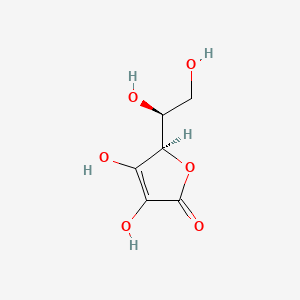
L(+)-Ascorbic acid is a high-purity vitamins supplied for industrial and specialty chemical applications. Contact our team for specifications, packaging options and lead times.
Product Specifications
| Grade | EP, E300, USP, FCC13, GMO free grade |
|---|---|
| Characteristics | White or almost white crystalline powder or colorless crystals |
| Assay | 99.0% – 100.5% |
| Identification | IR: Complies, CA: Positive |
| Melting point | About 190 °C |
| Specific rotation | +20.5° – +21.5° |
| Acidity (pH) | 2.1 – 2.6 (5% aqueous solution) 2.4 – 2.8 (2% aqueous solution) |
| Loss on drying | 0.4% max |
| Impurity E (Oxalic acid) | 0.2% max |
| Related Substances – Impurity C | 0.15% max |
| Related Substances – Impurity D | 0.15% max |
| Unspecified Impurities | 0.1% max |
| Total Impurities other than C,D | 0.2% max |
| Heavy metals | 10 ppm max |
| Arsenic | 3 ppm max |
| Lead | 2 ppm max |
| Mercury | 1 ppm max |
| Copper | 5 ppm max |
| Iron | 2 ppm max |
| Sulphated ash | 0.1% max |
| Clarity of solution | Clear |
| Color of solution | BY7 max |
| Residual solvents – Methanol | 0.3% max |
| Particle size | ≤30% more than 40 mesh, ≥45% between 40 and 80 mesh |
| Total aerobic microbial count (TAMC) | 10³ CFU/g max |
| Total combined yeasts and moulds count (TYMC) | 10² CFU/g max |
| Escherichia coli | Not detected / g |
| Staphylococcus aureus | Not detected / g |
| Salmonella | Not detected / 10 g |
Applications
L(+)-Ascorbic acid, commonly known as vitamin C, is a vital water-soluble nutrient widely used in pharmaceuticals, nutraceuticals, cosmetics, and food industries. In healthcare, it is applied as a dietary supplement to prevent and treat vitamin C deficiency, support immune function, and promote collagen synthesis for skin, bone, and vascular health. In the pharmaceutical industry, L-ascorbic acid is used as an antioxidant to stabilize formulations and protect active ingredients from oxidative degradation. In food and beverage production, it serves as a natural preservative, color stabilizer, and antioxidant, extending shelf life and maintaining nutritional quality. Additionally, in cosmetics, it is incorporated into serums, creams, and lotions for its skin-brightening, anti-aging, and antioxidant properties.
Benefits
L(+)-Ascorbic acid offers numerous advantages due to its strong antioxidant activity, water solubility, and biocompatibility. It effectively scavenges free radicals, reducing oxidative stress and supporting overall cellular health. The compound enhances collagen production, promoting skin elasticity and wound healing, and helps maintain iron absorption and immune system efficiency. Its stability in aqueous solutions and compatibility with other ingredients make it versatile for formulation in pharmaceuticals, foods, and personal care products. Moreover, its natural origin and safety profile make it suitable for both therapeutic and consumer applications.
Conclusion
L(+)-Ascorbic acid is an essential nutrient and versatile antioxidant with wide-ranging applications in healthcare, food, pharmaceuticals, and cosmetics. Its benefits, including immune support, antioxidant protection, collagen synthesis, and formulation versatility, make it a critical compound for health, wellness, and product stability. The continued use of L-ascorbic acid supports human nutrition, product innovation, and oxidative stress management.
Previous
Next