
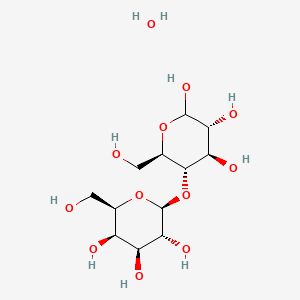
CAS · 10039-26-6
Product Overview
Lactose, monohydrate is a high-purity food-additives supplied for industrial and specialty chemical applications. Contact our team for specifications, packaging options and lead times.
Product Specifications
| Grade: | USP42/EP11.0/BP2023 |
|---|---|
| Content determination: | 4-O-β-D-pyran galactosyl β-D-glucose (C12H22O11), 98.0% - 102.0% |
| Appearance: | White to white-like crystalline particle or powder |
| Solubility: | Soluble in water; insoluble in ethanol, trichloromethane, or diethyl ether |
| Specific rotation: | +54.4 to +55.9° |
| Identification: | 1) Retention time of main peak consistent with reference solution 2) Infrared absorption profile consistent with control |
| Acidity/Alkalinity: | Tested according to law; solution should be clear or not exceed turbidity standard |
| Impurities: | Sum of impurity peak areas ≤ 0.5% of control solution peak area |
| Protein and impurity absorbance: | 400nm: ≤0.04 210-220nm: ≤0.25 270-300nm: ≤0.07 |
| Loss on drying: | ≤1.0% (80℃, 2h) |
| Water: | 4.5-5.5% |
| Residue on ignition: | ≤0.1% |
| Heavy metals: | ≤5 ppm |
| Arsenic salt: | 0.0002% |
| Total aerobic microbial count: | ≤1000 Cfu/g |
| Total yeast and mold: | ≤102 Cfu/g |
| Escherichia coli: | Not detected /g |
| Rotap particle size: | 75 μm: ≥80% 150 μm: ≥99% |
Applications
Lactose monohydrate is a naturally occurring disaccharide widely used in the pharmaceutical, food, and nutraceutical industries. In pharmaceuticals, it is commonly employed as an excipient in tablets, capsules, and dry powder formulations due to its excellent compressibility, flowability, and stability. It serves as a filler, binder, and diluent in solid dosage forms, supporting uniformity and consistent drug release. In the food industry, lactose monohydrate is used as a sweetener, stabilizer, and bulking agent in dairy products, confectionery, baked goods, and infant formulas. Additionally, it functions as a carrier in enzyme preparations, probiotics, and nutraceutical products, improving stability and handling.
Benefits
Lactose monohydrate offers multiple advantages due to its physical and chemical properties. Its crystalline structure provides good compressibility and flow, making it ideal for direct compression in tablet manufacturing. The compound is chemically stable, non-hygroscopic under controlled conditions, and compatible with a wide range of active pharmaceutical ingredients. Its mild sweetness and low reactivity make it suitable for food applications without altering taste or stability. Moreover, lactose monohydrate is easily digestible for most individuals and can serve as a carrier for bioactive compounds, ensuring consistent dosing and effective delivery in pharmaceutical and nutraceutical formulations.
Conclusion
Lactose monohydrate is a versatile excipient and functional ingredient used across pharmaceutical, food, and nutraceutical industries. Its excellent compressibility, stability, and compatibility make it essential for tablet and capsule production, while its sweetening and bulking properties support diverse food applications. With broad utility, lactose monohydrate continues to play a key role in formulation development, product quality, and manufacturing efficiency.
Previous
Conjugated Linoleic Acid丨CAS 2420-56-6
Next