
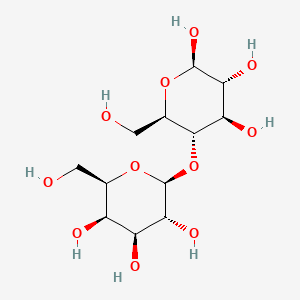
CAS · 63-42-3
Product Overview
Lactose is a high-purity food-additives supplied for industrial and specialty chemical applications. Contact our team for specifications, packaging options and lead times.
Product Specifications
| Grade | USP42 |
|---|---|
| Particle Size | 80 mesh |
| Appearance | White or almost white, crystalline powder |
| Solubility | Freely but lowly soluble in water, practically insoluble in ethanol (96%) |
| Identification A | Infrared absorption spectrum concordant with the standard |
| Identification B | Principal spot corresponds in appearance and RF value to Standard solution A |
| Residue on Ignition | 0.1% max |
| Heavy Metals | 5 µg/g max |
| Clarity and Color of Solution | 1g in 10ml boiling water should be clear and nearly colorless |
| Absorbance (400 nm) | NMT 0.04 |
| Optical Rotation (Anhydrous, 20°C) | +54.4° to +55.9° |
| Acidity or Alkalinity | 0.3ml phenolphthalein TS: colorless, requires ≤ 0.4 ml of 0.1N NaOH for color change |
| Loss on Drying (80°C for 2h) | 0.5% max |
| Water | 1% max |
| Protein and Light-Absorbing Impurities (210-220 nm) | 0.25% max |
| Protein and Light-Absorbing Impurities (270-300 nm) | 0.07% max |
| Total Aerobic Microbial Count (TAMC) | 100 cfu/g max |
| Molds and Yeasts | 50 cfu/g max |
| Escherichia coli (per 10g) | Not detected |
| Assay | 98% to 102% |
| Acidity (pH) | 4.0 - 7.0 |
| Boundary Particle Size (Over 60 mesh) | 60% min |
| Boundary Particle Size (Over 120 mesh) | 40% max |
Applications
Pharmaceutical Industry
Lactose丨63-42-3 is widely used as an excipient in the pharmaceutical industry, primarily as a filler or binder in tablet and capsule formulations. It enhances the flowability and compressibility of active pharmaceutical ingredients, ensuring uniform drug distribution.
Food and Beverage Industry
Lactose is a key ingredient in dairy products, baked goods, and confectionery. It acts as a sweetener, texturizer, and stabilizer in food processing. Infant formula and nutritional supplements also contain lactose to mimic the composition of human milk.
Biotechnology and Microbiology
Lactose serves as a carbohydrate source in microbiological culture media for bacterial fermentation. It is used in the production of dairy-based probiotics and bioengineered compounds such as antibiotics.
Cosmetics and Personal Care
Lactose is utilized in skincare and cosmetic products as a moisturizing agent and exfoliant. It contributes to the formulation of lotions, face masks, and creams.
Animal Feed
Lactose is added to animal feed, particularly for young livestock, to improve digestion and nutrient absorption, supporting healthy growth.
Benefits
Natural and Easily Digestible
Lactose丨63-42-3 is a naturally occurring sugar found in milk, making it a readily available and digestible carbohydrate source for infants, animals, and probiotics.
Enhances Drug Formulations
Its role as a pharmaceutical excipient ensures the effective delivery of medications, improving stability and bioavailability.
Provides a Mild Sweetness
Compared to sucrose, lactose has a lower sweetness level, making it suitable for controlled sweetness in food products without overpowering flavors.
Supports Gut Health
Lactose acts as a prebiotic, promoting the growth of beneficial gut bacteria, which can aid digestion and overall gut health.
Versatile Industrial Applications
Its use across multiple industries, from food to pharmaceuticals and animal nutrition, highlights its adaptability and functional benefits.
Conclusion
Lactose丨63-42-3 is a multifunctional compound with applications in pharmaceuticals, food production, microbiology, cosmetics, and animal nutrition. Its role as a natural carbohydrate, stabilizer, and excipient makes it an essential ingredient in various formulations, contributing to better health, improved product stability, and enhanced functionality.
Previous
Next